Brand tells court consent is "fundamental" as he denies all charges at Southwark trial
Russell Brand told the jury at his trial that in his view sexual consent is "fundamental" and "more important than sex itself".
Sima Kotecha (Senior UK correspondent), Steven McIntosh Updated 25 nov
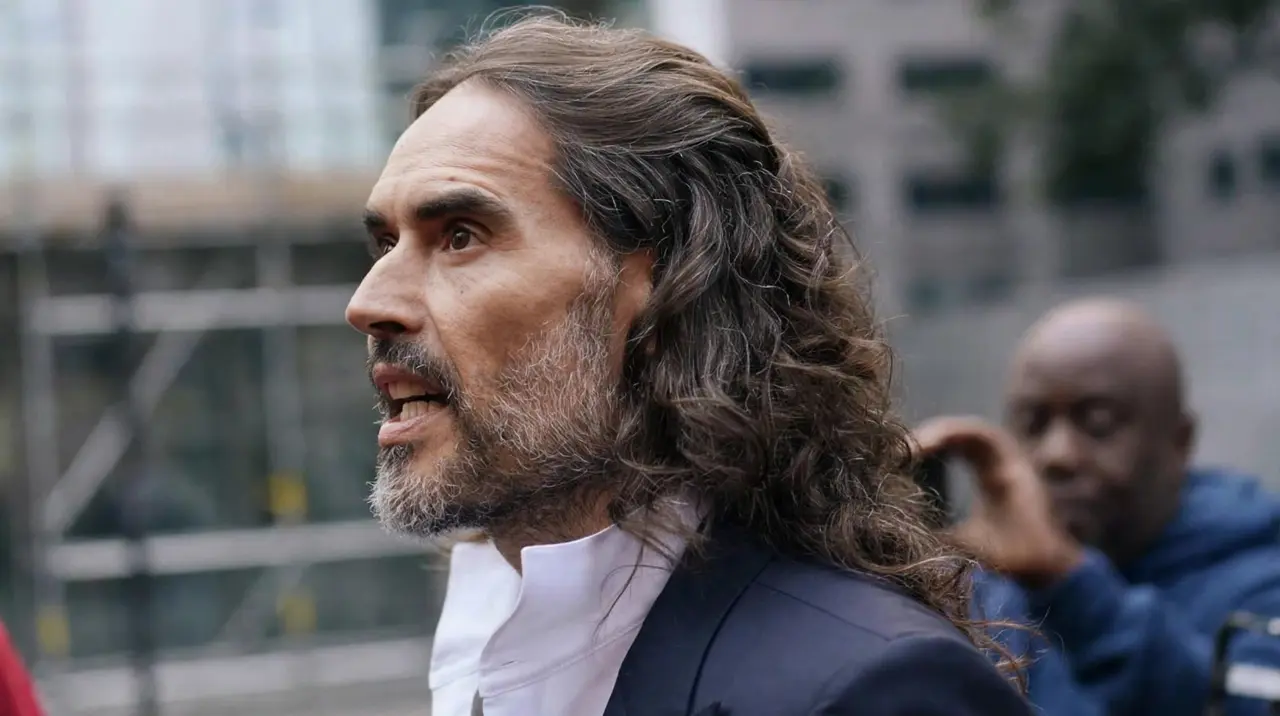
Russell Brand told the jury at his trial that in his view sexual consent is "fundamental" and "more important than sex itself".
Brand, 51, faces three counts of rape, three counts of sexual assault and one charge of attempted indecent assault. The allegations, brought by six female complainants, cover a decade between 1999 and 2009. He denies every charge.
Testifying on Wednesday, Brand described the allegations as "deeply traumatic" and said their effect on him had been "devastating". He took the stand as his defence opened at Southwark Crown Court in London.
When asked whether consent mattered to him, he said: "Consent is fundamental, essential, necessary and indeed in many ways more important than sex itself."
Brand acknowledged he had once been "comfortable" with letting his celebrity "facilitate sexual access, which I agree with you was wrong". Pressed by the prosecution on whether he "needed and was prepared to go to any lengths", he answered: "Absolutely no."
Prosecutor Riel Karmy-Jones KC put it to Brand that his earlier prepared police statement and his testimony to the jury did not match. "Ms Karmy-Jones, I completely agree," he said. "Since these events occurred there's been escalating recollection."
"It's been a deeply traumatic episode of my life. I've focused on it at the expense of my marriage, my children and health," he continued. "I recognise that this recollection includes small details that are inconsistent and I acknowledge that."
He added: "I do recognise I have been a very determined and focused man." Referring to women, he said he had been "persuasive, seductive, begging and flirting, and dedicated a lot of my life to what seems now beyond reckless philandering, and idiocy".
He told the jury: "Regrettably I've had a lot of consensual sex, which I see has caused harm."
Once Brand entered the witness box on Wednesday morning, defence barrister Ian Winter KC took him through the indictment, asking whether he had committed each offence. To each question Brand answered "no" in a loud voice directed at the jury.
Asked about the Channel 4 documentary and how it affected his ties with friends and colleagues, Brand said: "It was devastating." Winter then asked whether any friend or acquaintance who could have testified for him had been willing to come to court. "I have not," Brand replied. When Winter asked, "Will they touch you with a bargepole?", Brand said: "No."
Brand also told the court that, after the documentary and a newspaper investigation, he was informed he could not stay with his son at Great Ormond Street hospital in London while the child underwent open heart surgery. "Due to material that had been published in the public eye they had to bar my attendance and presence," he said.
"My entire life has been consumed by these allegations," Brand told the court, adding that he had "devoted myself to these matters".
Winter asked whether Brand remembered meeting the first complainant, who says he raped her at the Labour Party conference in Bournemouth in 1999. Brand said he did, describing her as "loquacious" and "interesting". Asked whether there was any truth to the rape allegation, he said: "No."
During cross-examination, the prosecution suggested Brand "just didn't care whether she was interested in having sex with you or not". Brand rejected that, saying he cared "very much". Asked whether he was certain he "didn't think no means yes", he replied: "I know what no means."
Questioned about another woman, who alleges the entertainer seized her breasts before pulling her into a toilet and raping her, Brand said he recalled being invited to a party at a London bar in 2004, where a friend introduced him to the complainant with "something like 'there's a bird here who really wants to meet you mate'."
Asked what he said to her when they met, he told the court: "I would have said something like, 'You're really, really beautiful'." The barrister asked whether he had grabbed her breasts. "Absolutely not," Brand said. Asked whether he could have behaved as alleged, he said it would have amounted to "disgusting behaviour".
"I was increasingly focused on my promiscuity," he said. "That's not the way I would have behaved because it's not only criminal but vulgar."
Brand said he remembered entering the toilet with her, but answered "no" when asked whether he had dragged or forced her there. "Did your penis enter her mouth at all whilst in the cubicle?" Winter asked. "No," Brand said.
A further complainant, who worked at MTV, alleges Brand tried to drag her into a toilet at work in 2001, when he was one of the channel's star presenters. She said she managed to break free. Asked whether he had intended a non-consensual sexual encounter, Brand told the court: "Absolutely not."
Regarding another woman, who accuses Brand of anal rape, he said he remembered her being in his dressing room at the Hammersmith Apollo theatre in London in 2009 after his comedy show. He said that after a "memorable" sexual encounter he got in touch again to try to meet, adding: "I was excited and enthusiastic about it."
Brand said he had stored her number in his phone under a code, explaining: "That was what I used to denote casual hook-ups and women I met I could hook up with." After inviting her to his house in Hampstead, he said they had consensual sex in his room. Asked whether he committed anal rape, he said no. Asked whether she had asked him to stop, he said no.
When the prosecution later asked whether his memory was "a little selective" about what he could recall, Brand replied: "No."
Brand was also questioned on Wednesday about his October 2010 wedding to singer Katy Perry and whether it produced a "sea change" in his life. He said the marriage brought him "staggering fame".
Under cross-examination, Brand agreed with the prosecution's suggestion that he blamed the Channel 4 documentary programme Dispatches for the allegations. Asked whether the media had treated him fairly, Brand said he "would reject that suggestion strongly".
Questioned intensively by Karmy-Jones, Brand denied pretending to be gay while pursuing women, after one complainant said she assumed he was gay and had felt "sexually safe with him".
Brand also told the jury that he had been obsessed with sex as a younger man, but denied setting himself a "goal" of sleeping with 5,000 women. From the witness box he said consent was "non-negotiable".
The trial continues.
Source: