Axel Scheffler, illustrator of The Gruffalo, weighs legal action against AI companies over copyright
Axel Scheffler, the artist whose drawings have enchanted young readers since 1999, told BBC London he is "seriously considering" legal action against artificial intelligence companies. He accuses them of breaching copyright by reproducing his work and wants them to stop using artists' material…
Matt Gravelling (London) Updated 25 nov
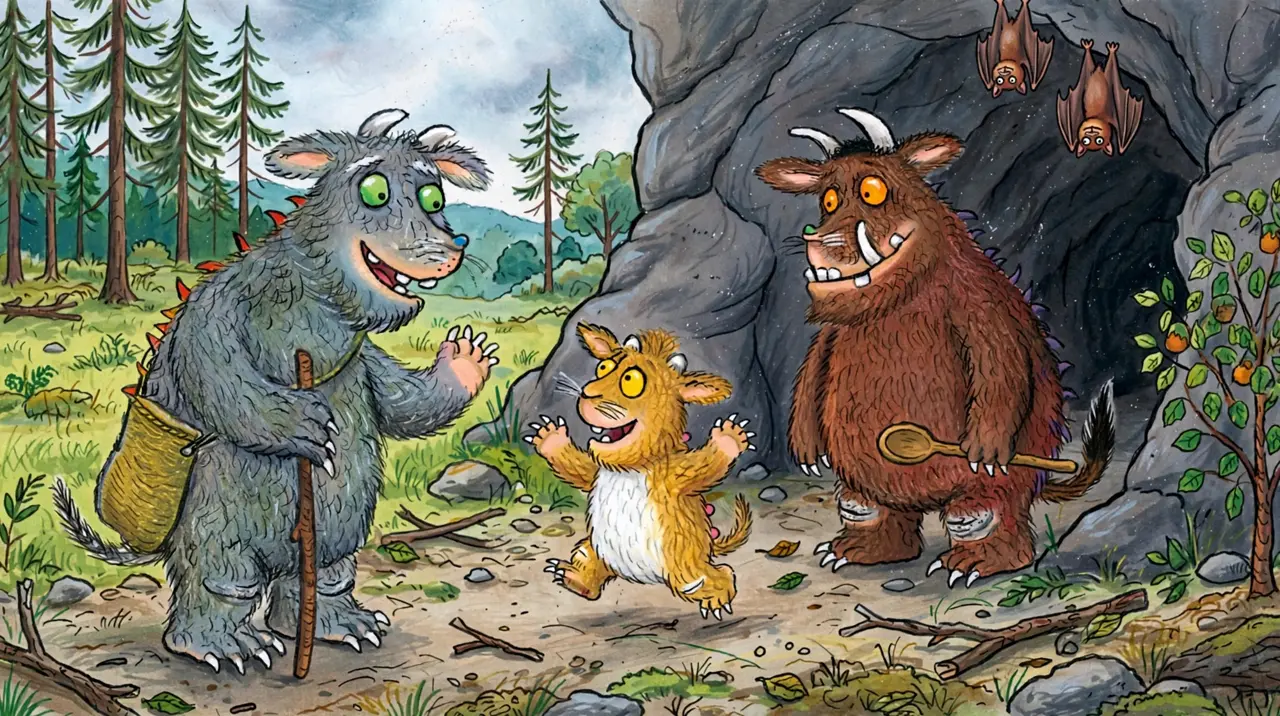
Axel Scheffler, the artist whose drawings have enchanted young readers since 1999, told BBC London he is "seriously considering" legal action against artificial intelligence companies. He accuses them of breaching copyright by reproducing his work and wants them to stop using artists' material without authorisation.
The Gruffalo, penned by London-born children's author Julia Donaldson, recounts how a mouse outwits a beast. Scheffler, who is based in south London, said: "I've been in touch with a lawyer in Germany."
He added: "There have been illustrators taking legal action against AI companies and I'm seriously considering it. I just want them to stop."
He did not identify any company his legal team might target. AI firms have argued in the past that training their models on copyrighted material does not automatically amount to infringement.
Scheffler, who does not have a smartphone, said he had tried to disregard AI until he was shown digital recreations of his best-known characters set in places including Silicon Valley and Oktoberfest.
"I was quite shocked. It's clearly my mouse, my Gruffalo, as close as they can do it, but the rest of the image is completely created - it's a clear theft of copyright," he told the BBC.
He is weighing a case in Germany because he regards the European Union as friendlier to creators.
Nick Buckland, an intellectual property lawyer at London firm Lewis Silkin, said Germany could indeed provide a path for creators trying to safeguard their work.
"There have been two cases in Germany where music collecting societies have been able to win against AI companies by showing that those AI companies have copied lyrics of songs verbatim and have presented them," he told the BBC.
Proving infringement, however, may be hard, Buckland said. A distinctive character like the Gruffalo might assist Scheffler's case, but he would still have to show that his copyright had been violated.
"Generative AI doesn't copy, it trains," Buckland explained.
"This is what AI companies say means that they're not infringing someone's copyright.
"For example, if someone wants a picture of a dog, what the AI machine does is it scans everything it's trained on, millions of pictures of dogs, and then one gets presented to the user."
OpenAI, the company behind ChatGPT, is already facing a suit from German publishing group Penguin Random House and author and illustrator Ingo Siegner. The claim alleges that OpenAI copied the children's book character The Little Dragon Coconut (Der kleine Drache Kokosnuss). The Munich Regional Court is due to rule in spring 2027 on whether the AI company broke copyright law.
Carina Mathern, a children's and young adult books publisher and member of the management board of Penguin Random House publishing group, said: "Through this lawsuit, we... want to help ensure that copyright remains effectively protected in the age of artificial intelligence and that fair conditions are secured for creative professionals."
An OpenAI spokesperson said: "We're having productive conversations with rightsholders around the world about supporting creativity, including fan art, while protecting intellectual property and taking appropriate action in response to copyright complaints."
The California-based company said its models were trained on a range of sources and that rights holders could lodge disputes directly with it.
For Scheffler, the matter extends beyond the output of an established illustrator whose Gruffalo titles have sold more than 18 million copies around the world. He said any lawsuit would not be about compensation but about safeguarding creators today and in the future.
Other artists share fears about AI's effect on their livelihoods. Ivy Deng, who is studying for a master's degree in painting at the Royal College of Art, said: "In terms of regulations, I don't feel protected about the fair use of my art."
She added: "In terms of the art industry and the people who support art, I have faith that they understand that there is a difference between the process and the perspiration behind developing an art practice and creating something by hand and replicating something in one moment."
Prof James Coupe, who heads the college's Artificial Intelligence & Digital Art programme, welcomed Scheffler's input to the debate. "We tend to frame this debate as a choice between embracing AI and rejecting it, but that misses the more important question of who gets to shape these technologies and whose interests they serve," he said.
"Art has a vital role here, not because artists should become technology developers, but because artistic practice should challenge the assumptions, values and forms of power that technology often asks us to take for granted."
The UK government announced last June a £2bn investment in AI by 2030, saying it sought "to harness the transformative potential". Buckland said ministers had to balance protection for the creative industries with room for AI to grow.
"It seems pretty clear that in order for the AI investment to be maximised, you need to open those floodgates," he said.
"The government has a difficult choice to make. It's trying to find a middle ground."
The government said it did not accept that backing the creative industries and supporting the AI sector were mutually exclusive. A Department for Culture, Media and Sport spokesperson said: "We have engaged extensively with creatives, AI firms, industry bodies, unions, academics and AI adopters.
"Copyright laws must protect the UK's position as a creative powerhouse while unlocking the extraordinary potential of AI-driven innovation to grow the economy and improve British lives."
Despite that, Scheffler and his publishers continue to discuss the prospect of legal action in his native Germany. For the illustrator, the worth of the work itself is at the heart of the argument.
"AI can never replace the hand-drawn image," he said.
"There's always something lacking. I recommend drawing by hand and being old-fashioned, and hopefully that will be more appreciated when AI takes over."
BBC Radio London's highlights are available on Sounds, and the station can be followed on Facebook, X and Instagram; story ideas can be emailed to [email protected].
Source: