London lags other European capitals in the fight against air pollution
London trails leading European cities such as Copenhagen, Berlin and Brussels in air quality, according to newly published research.
Kumail Jaffer (Local Democracy Reporting Service) Updated 25 nov
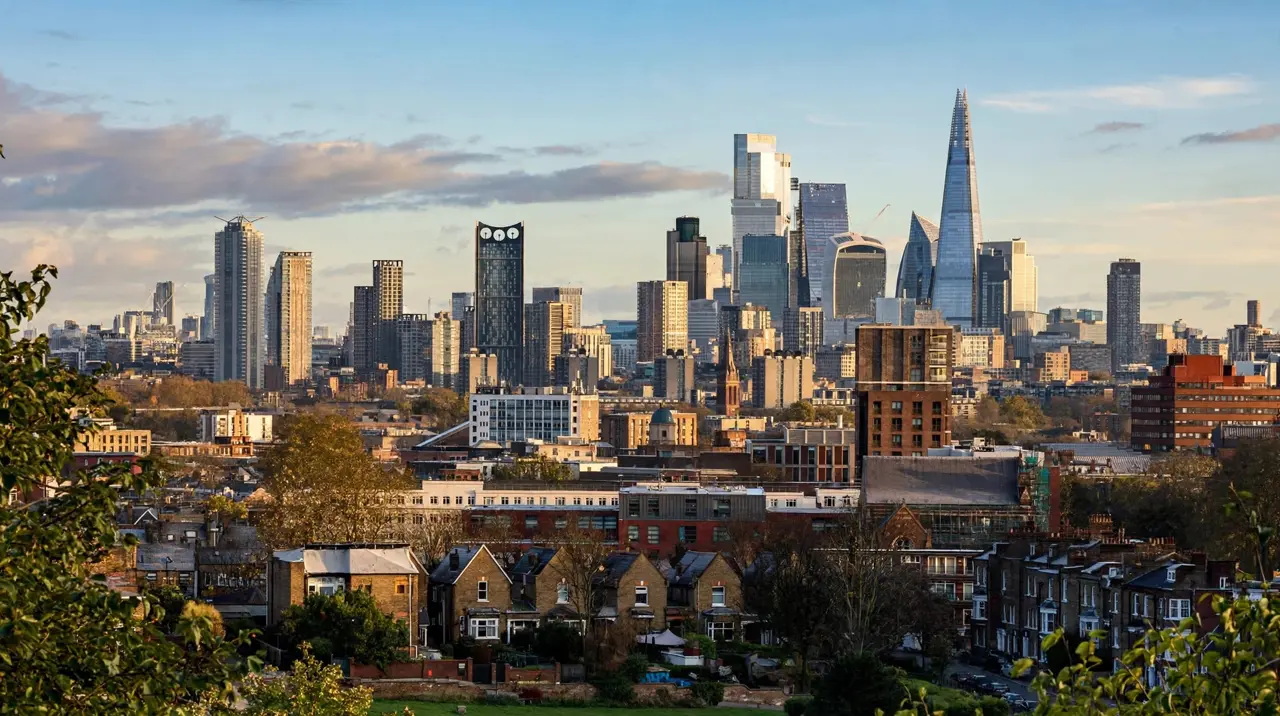
London trails leading European cities such as Copenhagen, Berlin and Brussels in air quality, according to newly published research.
Clean Cities' analysis places Greater London in 16th position out of 40 European cities, earning it a 'C' rating. Experts caution that tougher EU-wide pollution limits scheduled to come into force in 2030 could push the capital even further down the ranking.
Those restrictions would not cover London, since the UK has left the EU, but the report states that the capital would breach all four principal measures if tested against the same thresholds.
City Hall maintains that the capital's "air is dramatically cleaner than it was a decade ago", while conceding there is "more to do".
According to Clean Cities, City Hall has not done enough to curb diesel van use, which has become the biggest contributor to nitrogen oxides (NOₓ) from road transport in central and inner London.
Department for Transport figures show that 100,761 diesel vans were registered to London businesses at the end of 2025, the highest number recorded since this data began being gathered in 2009. By comparison, only 5,582 company-registered vans run on battery power.
Zak Bond, campaign manager at Clean Cities, said: "We cannot clean up London's air while thousands of polluting vans continue to drive around our streets."
He urged the mayor to establish a zero-emission zone for freight, adding: "London was once a leader in the fight for clean air. It's time to take the next bold step."
Transport for London (TfL) also came under criticism over insufficient protected cycling infrastructure.
Protected lanes currently cover just 12% of London's main roads, against 73% in Copenhagen and 66% in Greater Amsterdam, even though the capital records 1.5 million cycle journeys every day.
Jemima Hartshorn, founder and director of Mums for Lungs, said: "Children are still exposed to traffic fumes on their way to school and in their own neighbourhoods. This is simply not good enough for a city that has promised to protect children's health."
She advocated cleaner diesel deliveries, additional School Streets and safer routes for walking and cycling.
The report also highlighted the need to speed up electrification of the bus fleet, noting that only a third of buses in operation are currently clean. The mayor has committed to making every bus emission-free by 2030.
Another recommendation was to extend the School Streets scheme, under which drivers are temporarily barred from certain roads outside schools. Data indicates that these schemes cut nitrogen dioxide levels by as much as 23% during morning drop-off periods.
The study acknowledged City Hall's progress, recording a 46.3% fall in nitrogen dioxide (NO₂) and a 27.1% reduction in fine particulate matter (PM₂.₅) between 2016-18 and 2023-25. It attributed part of these gains to the introduction and expansion of ULEZ.
The Department for Environment, Food & Rural Affairs' Air Pollution in the UK 2025 report, released last month, listed Greater London, Bristol and Glasgow as locations exceeding legal nitrogen dioxide limits in 2025.
Thomas Turrell, the City Hall Conservatives' transport spokesperson, said the findings undermine the mayor's "false claims" about the impact of the Ultra Low Emission Zone (Ulez).
Green Party Assembly Member Caroline Russell said: "London has made progress, but the mayor cannot keep congratulating himself on Ulez while failing to reach updated targets."
She called for improved pollution warnings, an entirely electric bus fleet, more School Streets and steps to cut motor traffic.
A mayoral spokesperson said: "London's air is dramatically cleaner than it was a decade ago, and this report recognises the role the Ulez has played."
The spokesperson added: "The mayor has always been clear there's more to do."
According to the spokesperson, London's Cycleway network has expanded fivefold since 2016, and the mayor's revised Vision Zero Action Plan pledges 200 additional School Streets by 2030.
Listen to the best of BBC Radio London on Sounds and follow BBC London on Facebook, X and Instagram. Send your story ideas to [email protected]
Source: