Vauxhall Bridge may ban buses and fire engines in two to four years without repairs
According to Transport for London (TfL), Vauxhall Bridge would need to exclude buses and fire engines within two to four years unless roughly £60m is spent on repairs. The authority added that the crossing, described as the busiest in central London, might have to close to all vehicles in four to…
Tim Stokes (London), Karl Mercer (London political editor) Updated 25 nov
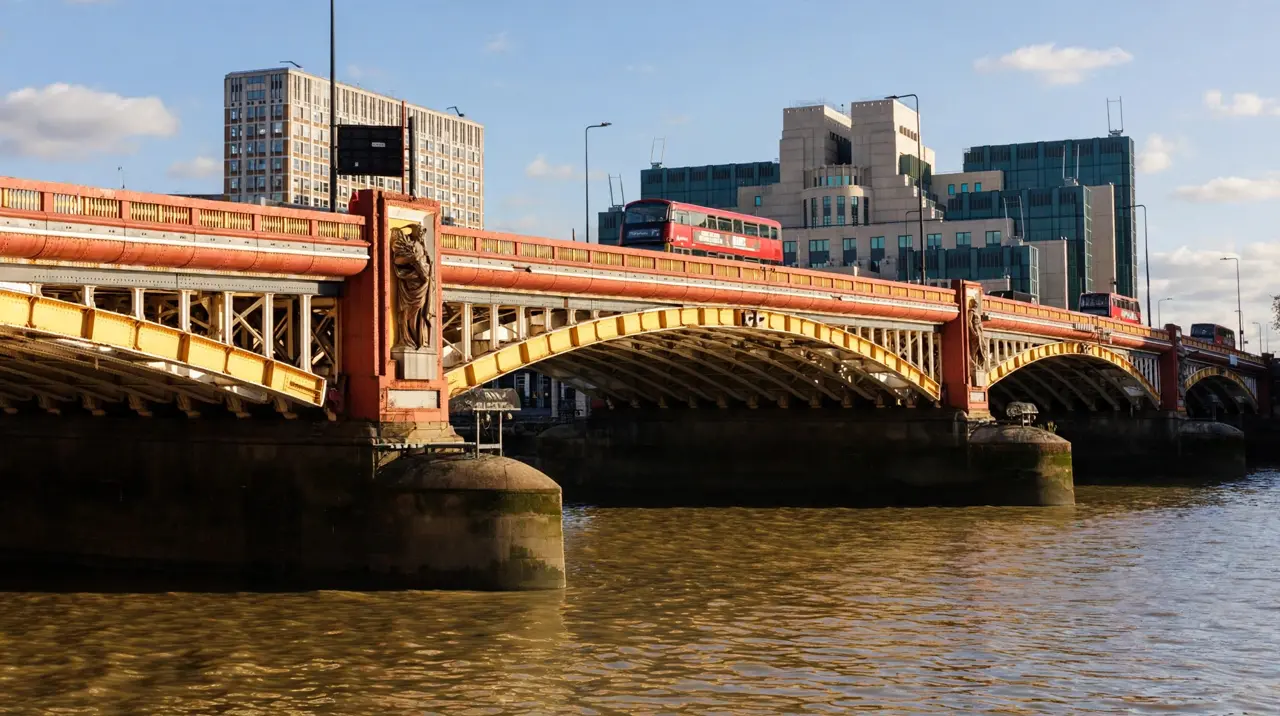
According to Transport for London (TfL), Vauxhall Bridge would need to exclude buses and fire engines within two to four years unless roughly £60m is spent on repairs. The authority added that the crossing, described as the busiest in central London, might have to close to all vehicles in four to 10 years if the required work is not carried out.
TfL has submitted a bid to the government's £1bn structures fund, and the outcome of the successful bids is expected to be announced shortly. David Rowe, TfL's director of investment planning, explained to BBC London that the bridge's waterproofing had "failed" and "we will see progressive deterioration unless action is taken, which is why these bids are so important for us".
Around 44,000 vehicles cross Vauxhall Bridge each day, of which approximately 2,450 are buses and 1,850 are heavy goods vehicles. The application submitted by TfL to the Department for Transport (DfT) details the condition of the crossing, noting that although the waterproofing was replaced in 2020, there has been "significant deterioration of the underside steelwork" and "key structural elements [are] now in very poor condition".
Fascia panels on the 120-year-old Grade II*-listed bridge are also "at risk of detaching and falling on to the river below, posing a safety hazard to passing vessels". A weight limit of 18 tonnes was imposed in July to slow the deterioration, but the letter indicates that without investment a 7.5-tonne limit would be necessary by 2030, effectively closing the bridge to buses, coaches and numerous emergency service vehicles. Even with that restriction in place, the crossing would have to shut to all vehicles by 2036 if substantial work is not completed.
The letter states that the full programme of works would cost the "equivalent to approximately two years of TfL's entire planned structures renewals budget". Rowe declined to provide a precise amount but confirmed it was around £60m, noting that the transport authority currently allocates £30m annually to renewing its structures.
He told BBC London that if the bid fails, TfL would have to "look very, very carefully about where we prioritise our renewals". "We have a certain amount that we can invest every year but with projects as big as Vauxhall Bridge... we really, really do need support alongside what we can bring", he said.
At present, TfL spends £860m a year maintaining its whole network of roads, bridges and the Tube. However, the authority maintains that it should be allocating £1.2bn annually, and the backlog of outstanding work is estimated to have reached £6.5bn. Rowe said the organisation's finances were affected by the loss of a government operating grant that had been in place until 2018, together with "the impact that we've seen from Covid in terms of reduced people on our networks and therefore reduced income".
Data obtained through a Freedom of Information request shows that of the seven road bridges over the Thames managed by TfL, three are classified as being in a "very poor" state: Vauxhall, Lambeth and Westminster. The remaining four — Twickenham, Kew, Chiswick and Battersea — are listed as "poor".
When questioned about whether the authority should be held responsible for the condition of the structures it oversees, Rowe replied that this would be "not fair" and that it is investing "very significant amounts… to keep them operable but we have a backlog due to that reduced income".
The DfT launched the structures fund in April, inviting authorities across the country to bid for a share of the £1bn allocation. Alongside Vauxhall Bridge, TfL has requested financial assistance for the Croydon Flyover in south London, which carries roughly 40,000 vehicles daily with a further 30,000 travelling beneath it. The flyover is described as being in "a critical state of deterioration" because of water damage to the steelwork, with "several essential components... already assessed as life-expired".
In a separate letter to the DfT, TfL listed 13 schemes across London, including bids submitted by certain boroughs, which are considered "network priorities" because any additional closures or restrictions would "have significant adverse effects on the immediate wider community and economy". Six of them, all already subject to safety-related restrictions, are identified as "the highest priority":
Albert Bridge, Kensington and Chelsea (closed to vehicles since February)
Broadmead Bridge, Redbridge (closed to vehicles since July 2023)
Croydon Flyover (designed to have a 40mph speed limit but limited to 30mph)
Hubert Grove Footbridge, Lambeth (closed since November 2023)
Richmond Bridge, Richmond upon Thames (18-tonne weight restriction)
Vauxhall Bridge (18-tonne weight restriction)
Combined, these works for the 13 projects would cost more than £400m. "We need very significant levels of capital right across the capital to address the problem," Rowe said.
London's Mayor Lord Khan told BBC London the city had faced difficulties with its bridges because "we had anti-London governments in eight of my last 10 years". "The good news is this government has notably increased massively the capital funding that TfL gets but also that we can bid now for infrastructure projects."
The DfT, when approached, did not specify when the successful bids would be announced, stating only that this would take place "in the autumn".
Listen to the best of BBC Radio London on Sounds and follow BBC London on Facebook, X and Instagram. Send your story ideas to [email protected]
Source: