Urgent overhaul needed or policing will fail modern criminals, Met chief Sir Mark Rowley says
The head of the Metropolitan Police, Sir Mark Rowley, has said the current system in England and Wales is unable to handle sophisticated modern criminals and requires urgent change. In a speech on Friday, he warned it was "heading for failure" unless reformed.
Daniel Sandford (UK correspondent), Florence Freeman Updated 25 nov
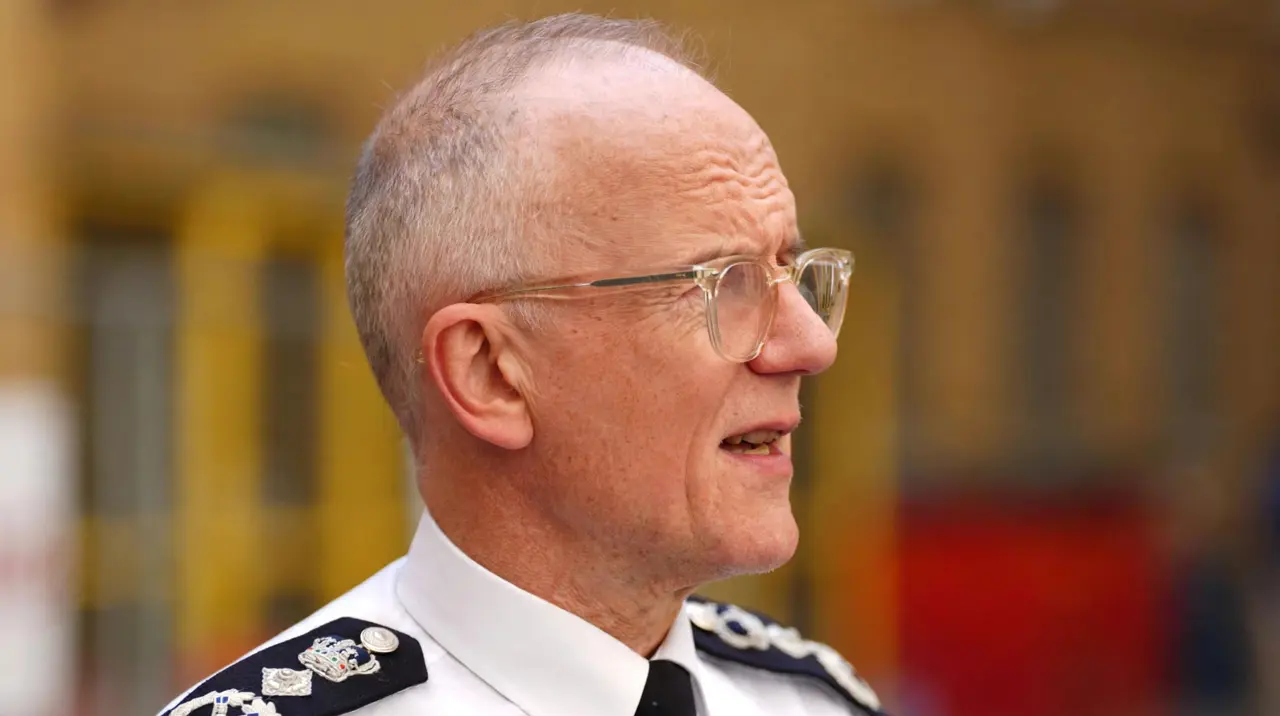
The head of the Metropolitan Police, Sir Mark Rowley, has said the current system in England and Wales is unable to handle sophisticated modern criminals and requires urgent change. In a speech on Friday, he warned it was "heading for failure" unless reformed.
His plan would be the most extensive shake-up since the 1960s. It envisages eight to 10 regional police forces, backed by hundreds of local policing commands and a new national force, replacing the existing 43-force structure with three tiers. Local teams would handle neighbourhood problems, regional forces would pool specialist resources, and a National Police Service would take on the most serious crimes.
The proposals follow a direction that appeared to be gathering support in January, when many senior officers backed creating a National Police Service and the case for much larger regional forces seemed to have prevailed. Home Secretary Shabana Mahmood published a white paper in line with those ideas and asked Lord Hogan-Howe, a former Metropolitan Police commissioner, to examine possible force boundaries.
The political situation changed in July when Andy Burnham became prime minister. Burnham has so far made no public comment on the plans, and police chiefs are concerned that he may not support them. That may explain why they spoke out so forcefully on Friday, warning that inaction could have a potentially apocalyptic impact.
Alongside their case for large regional forces, the chiefs made a financial argument similar to the one used in debates over defence funding. Sir Mark noted that police spending in England and Wales has dropped from 0.9% of GDP to 0.7%. The implication was that while a growing share of resources goes to defending the country, a smaller share goes to protecting communities and homes.
In his speech, Sir Mark said organised crime groups, fraud networks, cyber-criminals and people involved in online child abuse increasingly work across regional and international borders, whereas police forces are still organised around local areas. "The victim remains local but increasingly the threat does not," he said, citing children "groomed by predators on another continent".
He said the present system was finding it hard to keep up. "We have 43 overstretched forces trying to do too much, with too little." Merging forces, in his view, would cut duplication and could release thousands of roles to be moved into front-line policing.
Speaking on BBC Breakfast before the speech, Sir Mark said crime had changed considerably over the years while the police were still largely organised as they had been 60 years earlier. "Obviously the world's moved on a long way in that time."
The proposals follow a consultation that Mahmood launched in January. It covered a National Police Service to deal with the most complex crimes and the possibility of merging the 43 forces into a smaller number of larger ones.
Some rural police and crime commissioners, however, have called the plans "political manoeuvring" by larger forces to "load the dice in their favour". David Sidwick, the Dorset police and crime commissioner, repeated his strong opposition to merging forces. "My concern is simple. If funding is diverted away from frontline services in Dorset to establish new national structures, local communities could end up receiving less rather than more."
Matthew Scott, Kent's Conservative police and crime commissioner, said: "[Sir Mark believes] policing should suffer a decade of disruption, that local policing services should be cut back and made more remote, and that this can all be done without ever asking the public what they want from their local police force."
The Association of Police and Crime Commissioners also questioned whether mergers were the best route to better policing. "The case for modernisation and a National Police Service is clear. The case for reducing 43 forces to nine regional 'mega-forces' is not."
Mark Roberts, the outgoing Cheshire chief constable, argued that any new model must retain the parts of policing that already perform well, rather than let them "get subsumed" and end up "scrabbling to try and get resource from some of the metropolitan areas". "Bigger isn't always better - we see some high performing big forces, we see some poorer performing big forces." He added after Rowley's speech: "The aim is to raise everyone at least to the minimum standard of the best."
Asked on Breakfast about the consequences of no reform, Sir Mark replied: "the risk is failure". He said: "Failure means solving fewer crimes, less local presence, when you get exceptional incidents like a certain outbreak of disorder like we saw in Hampshire." In September, police clashed with anti-migrant protesters in Portsmouth after 120 migrants arrived in a single dinghy.
He added: "Standing still looks like a degradation of policing day by day, struggling even more as criminals outpace policing because we're not organised to meet it."
A Home Office spokesperson defended the plans, saying: "Our current model of policing has not changed since the 1960s and is no longer fit for purpose."
Sir Mark also stressed financial pressure, saying police spending had fallen from around 0.9% of GDP to 0.7% since 2010, which he called "a big hit". He told the BBC: "We do need investment as well, but if you threw loads of money at the current system it's still not going to fix the fundamental problem, it's not designed to meet today's challenges," adding: "Throwing money at the current system isn't going to work."
In the speech, he said years of underinvestment had left forces dependent on ageing technology, with officers increasingly pulled away from neighbourhood policing to handle other demands, including mental health and social care. He also cited declining performance: positive outcomes nationally are now less than half their level 12 years ago, while public confidence has dropped by 9%.
Additional reporting by Olivia Ireland.
Source: