UK nations confirmed as joint hosts of the 2035 Women's World Cup
The four home nations were the sole candidates for the event and were formally approved as co-hosts at a virtual meeting convened especially for the purpose from Fifa's headquarters in Zurich.
Dan Roan (Sports editor) Updated 25 nov

The four home nations were the sole candidates for the event and were formally approved as co-hosts at a virtual meeting convened especially for the purpose from Fifa's headquarters in Zurich.
The finals will run for 39 days and feature 104 fixtures involving 48 national teams. Under the 'All Together' proposal, 19 stadiums would be used: 14 in England, one in Northern Ireland, two in Scotland and two in Wales.
At a special session of Fifa's Congress on Monday, the organisation also cleared the combined proposal from Mexico, the United States, Costa Rica and Jamaica to stage the 2031 finals, which will mark the first edition of the tournament with 48 participating teams.
On the same day, the UK government set out an ambition of enabling one million additional girls to play, watch or take on leadership roles in sport by the time the 2035 tournament is held.
Match venues for 2035
England was unsuccessful in its bids to stage the men's World Cups of 2006 and 2018, and a joint UK and Ireland proposal for 2030 was subsequently dropped. England and Scotland did stage matches at the men's Euros in 2021, while England hosted the women's European Championship in 2022, won by the Lionesses. England, Scotland, Wales and the Republic of Ireland are due to host the men's European Championship in 2028.
Mark Bullingham, chief executive of the Football Association, said: "Hosting Euro 2022 allowed us to change the game in our country, by creating a generation of aspirational role models and growing demand from women and girls to play.
"Hosting a World Cup would give us the chance to build on that across all four nations."
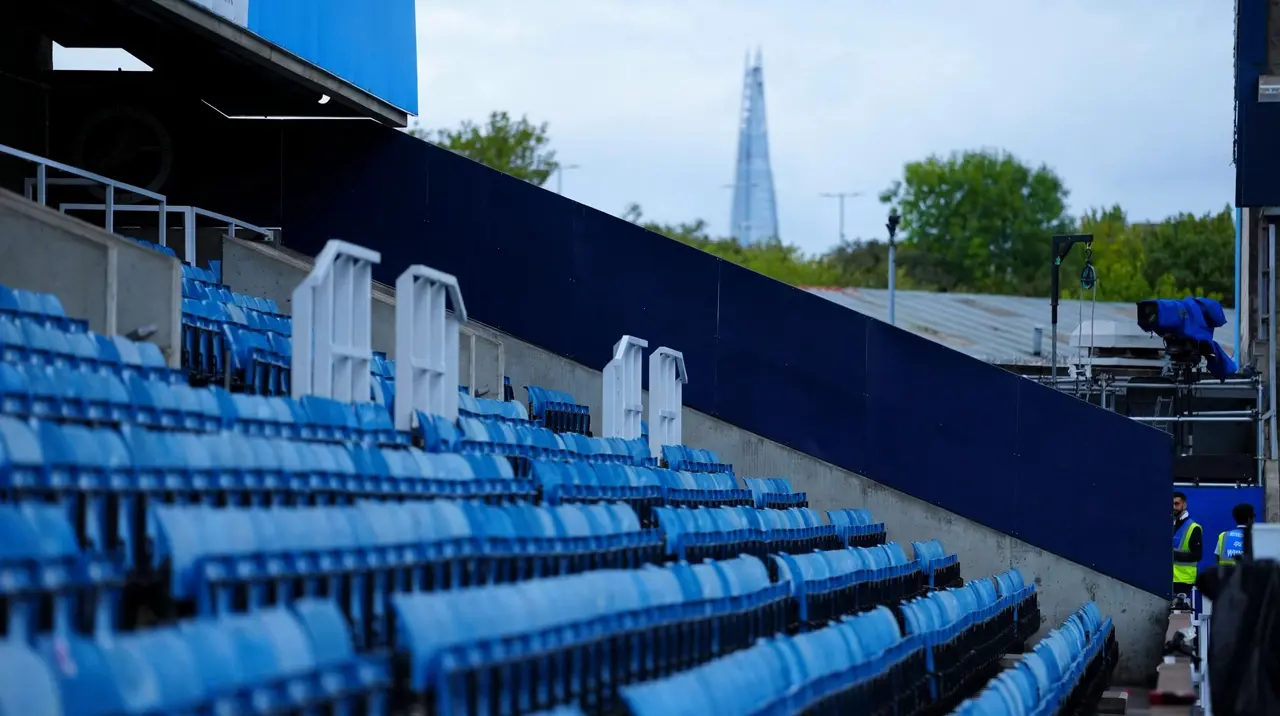
The English grounds listed in the bid are Villa Park, The Amex, Ashton Gate, Elland Road, Hill Dickinson Stadium, Emirates Stadium, Selhurst Park, Tottenham Hotspur Stadium, Wembley, Etihad Stadium, St James' Park, the City Ground, the Stadium of Light and Old Trafford. Even if Manchester United's proposed new Old Trafford does not proceed, the existing ground would remain eligible in its present form.
Wales would stage games at Cardiff City Stadium and Principality Stadium, with Scotland's fixtures at Easter Road in Edinburgh and Hampden Park in Glasgow. Northern Ireland had lost the chance to co-host the men's Euros of 2028 after the UK government said in 2024 that funding for the redevelopment of Casement Park would not be provided in time, though a revamped Windsor Park is expected to host matches in 2035.
Three further stadiums might be incorporated: Birmingham's new Powerhouse Stadium, the redeveloped Racecourse Ground in Wrexham and a possible new Chelsea ground. Including these would raise the event to 22 venues across 16 cities. Fifa has not yet determined whether all four co-hosts will receive automatic qualification.
Effects on the women's game
Since the Women's European Championship was staged in England in 2022, participation by women and girls in football has increased by 2.3m. Women nevertheless continue to be significantly underrepresented in leadership posts, holding only a quarter of chief executive, chair or performance director positions in major UK sports, while just 12% of sports federations are headed by a woman.
Noel Mooney, chief executive of the Football Association of Wales, said: "This is a proud day for Welsh football.
"We've put forward Wrexham and Cardiff as host cities, and it's exciting to think what a World Cup could bring to both cities and the communities around them.
"In Llunio Cymru - our 10-year strategy - we've set ourselves the ambition of reaching the knockout stages in 2035. Some of the players who could take us there are learning the game at clubs across Wales today. Our job is to make sure that wherever a girl grows up in Wales, she can find a team close to home, have a coach who helps her develop and see a route to the Cymru shirt."
Irish Football Association chief executive Patrick Nelson said the event "would be felt in every club and every age group, in every part of the country".
"Our young players would grow up having watched the best in the world play at home, and there is no substitute for that," he added.
Scottish Football Association chief executive Ian Maxwell said hosting the tournament would be "the most significant thing to happen to the women's and girls' game in Scotland".
He added: "The impact would go far beyond just the matches themselves. The level of investment into coaching, facilities and player pathways in the years beforehand will shape the future of the game for the generations to come."
A Fifa evaluation issued earlier this month scored the bid 4.3 out of five and classified its contractual framework as 'medium risk'. The document stated that "certain government guarantees contain material qualifications, particularly regarding tax and safety and security".
This is believed to relate to the absence of agreement over Fifa's request for tax-free status covering all football-related activities. The evaluation also said: "The bidder has submitted an extensive set of government support documents and contractual hosting agreements, demonstrating the commitment of the relevant authorities and stakeholders.
"However, certain government guarantees, particularly those relating to safety and security and tax, contain certain qualifications which have been duly noted in the legal evaluation.
"While certain contractual matters remain subject to further discussion, the bidder's proactive engagement with Fifa and the substantial lead-in time provide a sound basis for resolving these outstanding issues."
Source: