The 10 riskiest road junctions for cyclists in London
The London Cycling Campaign has published a map drawn from emergency services collision data, identifying the capital's most hazardous spots for both cyclists and pedestrians.
Amy Clarke (London) Updated 25 nov
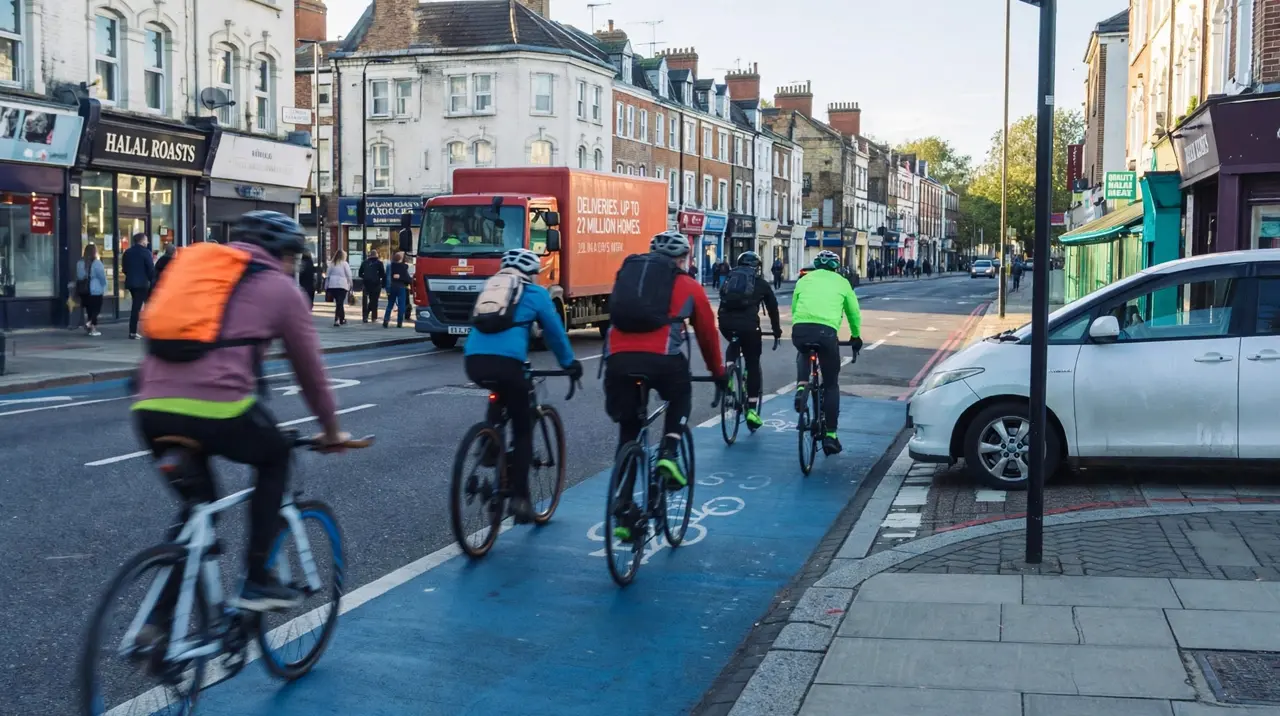
The London Cycling Campaign has published a map drawn from emergency services collision data, identifying the capital's most hazardous spots for both cyclists and pedestrians.
The junction of Upper Tooting Road and CS7 in Wandsworth, where 27 cycling collisions were recorded over five years, has been ranked London's riskiest cycling hotspot for the fourth year in succession.
In response to the results, Transport for London said it was "determined to eliminate death and serious injury on the road network", and pointed to completed work at 48 safer junctions alongside investment of more than £150m.
The figures arrive as cycling participation continues to expand in the capital. Will Norman, the mayor of London's walking and cycling commissioner, reported that daily cycle journeys have increased by 43% since 2019, reaching roughly 1.5 million per day.
The following locations were listed as London's 10 most dangerous junctions for cyclists, based on collision data covering 2021 to 2025:
Ansell Road, Derinton Road, Lessingham Avenue, Price Close and Upper Tooting Road (Wandsworth): Eight serious cyclist collisions and 19 slight collisions.
Broad Lane, High Road and West Green Road (Haringey): Eight serious cyclist collisions and 10 slight collisions.
Curtain Road, Gatesborough Street, Great Eastern Street, Leonard Street, New Inn Yard and Phipp Street (Hackney): Nine serious cyclist collisions and nine slight collisions.
King Street and Weltje Road (Hammersmith and Fulham): Seven serious cyclist collisions and 16 slight collisions.
Carpenters Road, High Street, Jupp Road West and Wise Road (Newham): One fatal cyclist collision, two serious collisions and nine slight collisions.
Borough High Street, Duke Street Hill, King William Street, London Bridge and Railway Approach (Southwark): Six serious cyclist collisions and 18 slight collisions.
Dunton Road, Kinglake Street, Madron Street, Mina Road and Old Kent Road (Southwark): One fatal cyclist collision, two serious collisions and seven slight collisions.
Westway and Wood Lane (Hammersmith and Fulham): One fatal cyclist collision, three serious collisions and two slight collisions.
Apothecary Street, Bridewell Place and New Bridge Street (City of London): Seven serious cyclist collisions and three slight collisions.
Old Kent Road and St James's Road (Southwark): One fatal cyclist collision, two serious collisions and three slight collisions.
Helen Cansick, TfL's head of Healthy Streets Investment Planning, said: "Our deepest sympathies are with everyone impacted by loss of life and injuries on London's roads."
She explained that TfL was working hard to deliver improvements at some of the capital's "most dangerous and intimidating junctions".
According to Cansick, work has been finished at 48 safer junctions across London, including recent upgrades in the vicinity of Lambeth Bridge, while plans for Monument Junction are currently out for consultation.
TfL also confirmed that more than £150m has been allocated through its Safe and Healthy Streets programme, with £94.8m made available to boroughs in 2026-27 for road safety projects.
Norman said City Hall was "making life-saving changes at some of London's most dangerous junctions".
He added that additional improvements are planned for Monument Junction, and that schemes are also under way in Shoreditch and Streatham Hill.
The London Cycling Campaign is pressing for more "all-round protected junctions", where cyclists and pedestrians are given a dedicated green-light phase while motor traffic is held on red.
The organisation says the design aims to reduce the risk of collisions between people walking, wheeling or cycling, and turning vehicles.
Tom Fyans, chief executive of the London Cycling Campaign, said: "Less than a handful of London boroughs so far have delivered 'all round protected' junction designs, despite a growing list of cities and towns outside London managing to.
"Why haven't TfL yet managed a single one, why are so few boroughs delivering them and why does filtering side-road junctions with significant collision patterns seem so difficult, also?
"Concerns over drivers facing a few seconds more on journey times all too often seem to trump dealing with fatal and serious collisions for those cycling, walking and wheeling."
Listen to the best of BBC Radio London on Sounds and follow BBC London on Facebook, X and Instagram. Send your story ideas to [email protected]
Source: