Report: Reliance on AI could weaken police investigative skills
According to a report examining the deployment of artificial intelligence in policing, inexperienced officers should carry out investigative tasks themselves rather than delegate them to AI tools.
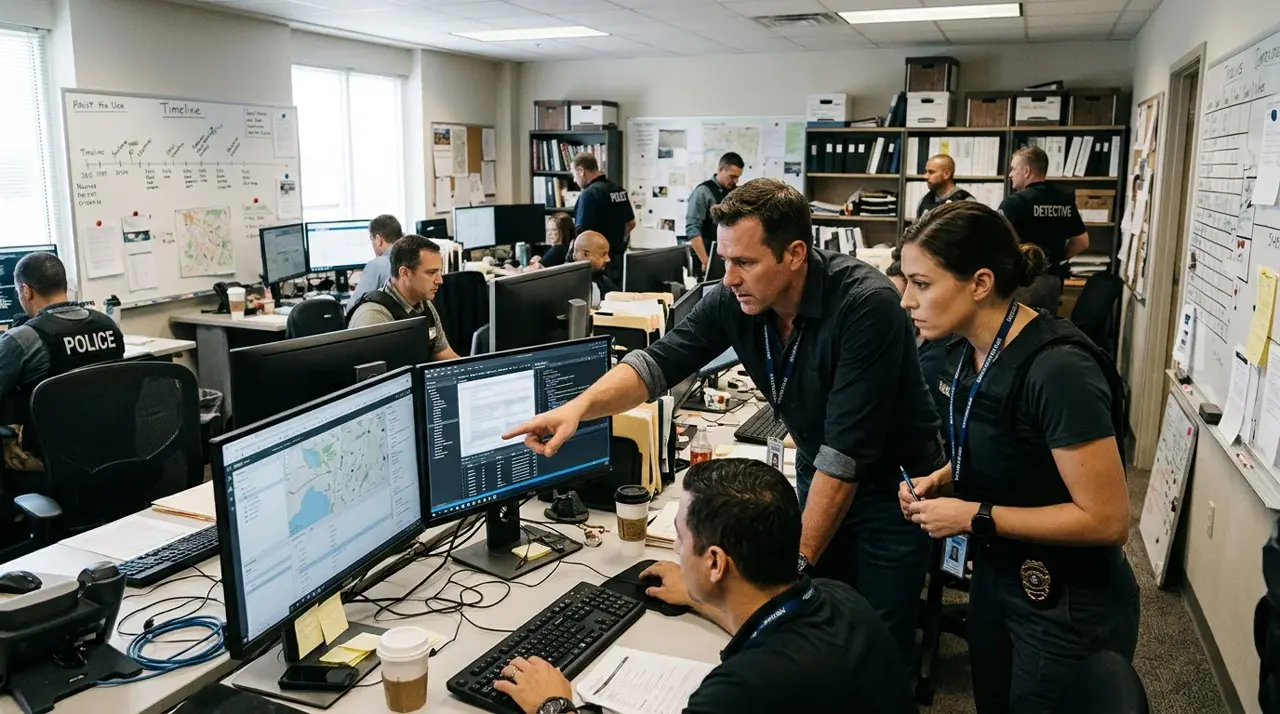
According to a report examining the deployment of artificial intelligence in policing, inexperienced officers should carry out investigative tasks themselves rather than delegate them to AI tools.
Ahmad said investigators risk never acquiring key crime-solving abilities if they do not manually review evidence or study how offenders behave. She is the deputy chair of the London Assembly's Police and Crime Committee.
The report notes that the Metropolitan Police applies its own internal guidelines on AI use, and that these could be loosened at any point. Ahmad is urging lawmakers to introduce new legislation and to establish an independent regulator to supervise how police forces deploy AI. Both the Home Office and the Met Police were contacted for a response.
In the document Policing London in the Age of AI, Ahmad stated: "Officers become experts, in part, by doing much of the work that AI is now lifting off of them, spending hours trawling through evidence, learning the language of drug dealing, or reading patterns of offender behaviour.
"If AI absorbs those tasks, newer officers may never develop the underlying skill, which poses a risk to their ability to scrutinise the answers an AI tool gives them in future."
She also said: "Training should keep newer officers doing some of this work by hand, so they build the judgement they need to spot when a tool gets it wrong."
On the wider adoption of AI across policing, Ahmad described the Met as "the most frequent user of the most debated tools".
The force has recently drawn attention in a dispute concerning Palantir products. The Metropolitan Police Federation, which represents rank-and-file officers, opposed the use of the company's technology to monitor the workforce.
In addition, the Met has faced criticism in recent years for deploying live facial recognition (LFR) technology to locate wanted criminals within crowds.
Although legislation covering LFR has been put forward, Ahmad wants further laws and an independent regulator to oversee AI use by the Met. She recognised that the force has "built an impressive and substantial body of internal governance around its use of AI," while pointing out: "A rule that a force writes for itself is one it can revise, widen or relax at its own discretion.
"And beneath all of it lies the absence of any legislation specifically governing police use of AI."
BBC Radio London is available on Sounds, and BBC London maintains profiles on Facebook, X and Instagram. Story suggestions can be sent to [email protected].
Source: