Oxford Street spending climbs since traffic ban, figures indicate
The mayor of London has welcomed preliminary numbers highlighting the "transformational impact" of pedestrianisation on Oxford Street.
Ruth Comerford (London) Updated 25 nov
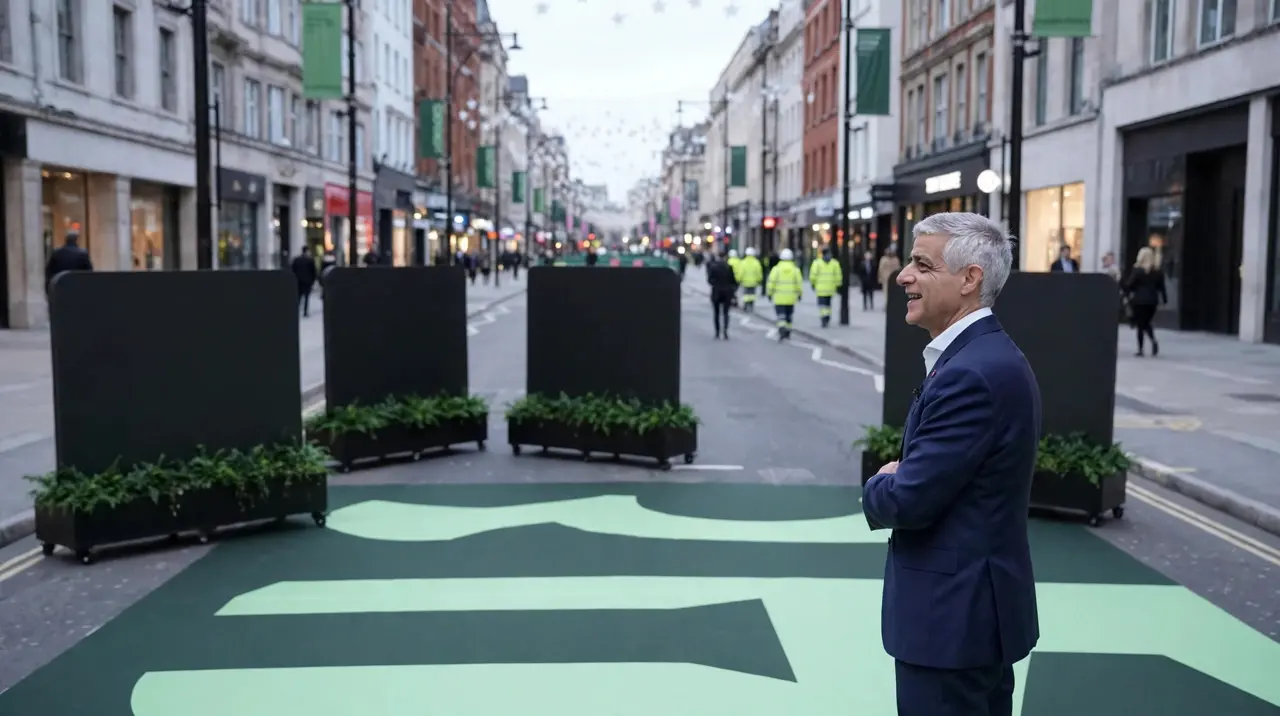
The mayor of London has welcomed preliminary numbers highlighting the "transformational impact" of pedestrianisation on Oxford Street.
Payment company Adyen reported that spending in Oxford Street shops climbed 28%, from roughly £2.9m last year to £3.7m this year.
According to City Hall and the Oxford Street Development Corporation, visitor numbers and shop spending during the opening week of pedestrianisation both exceeded the comparable period a year earlier.
"Our early work has been very warmly received by Londoners and visitors, with a surge in footfall and spend," Lord Sadiq Khan said.
In-store transactions increased by 19% over the same span.
Khan described the initial outcome as "better than we had anticipated and a real boost for the nation's high street and the businesses that make it such a special place to visit".
"These are staggering early results that show the transformational impact that the pedestrianisation of Oxford Street will have," he said.
Since 26 October, a section of nearly 1km (0.62-mile) of the shopping district has been closed to vehicles between Orchard Street and Great Portland Street.
The finished scheme is projected to cost £150m, covering the highway alterations.
Footfall in the traffic-free stretch rose 16%, while the number of international visitors was 42% higher year-on-year.
Transport for London (TfL) logged higher numbers of entries and exits at Oxford Circus and Bond Street stations during the first week without traffic.
TfL street-level sensors counted footfall outside Bond Street station at up to 46% above the average weekday figure recorded there between 7 September and 16 October 2026.
BBC London heard from shoppers and visitors who welcomed the alterations, describing the street as safer and more enjoyable without traffic.
Dan Hills, chief executive of Market Halls on Oxford Street, said pedestrianisation delivered a "really positive immediate impact" on trading, with footfall 29% higher and sales up 25% week on week.
"It's a big change, it will take some time to bed in, but I do think and I do hope it will be positive for all retailers on the street," he added.
Opponents of the scheme, however, have questioned its consequences for journeys through the West End, especially for bus passengers and other road users.
"The mayor, through his publicity machine, is predictably celebrating increased footfall on Oxford Street, but it hardly merits his description of 'staggering' early results," said Michael Bolt, of the Marylebone Association.
"Our examination of the revised bus timetables reveals a very different picture from the one presented by the mayor.
"The public was told that most bus journey times would change by a minute or less. Yet TfL's new timetables allow an additional seven to nine minutes for journeys on route 98, increases of up to 53%."
He also questioned when the announcement had been made.
"Oxford Street has now been closed for two full weeks, yet the mayor has chosen to publish results from only the first week, which coincided with school half-term.
"The second week, when schools had reopened and normal weekday traffic returned, would surely provide a more representative picture of the consequences for surrounding streets."
Accessibility has drawn further worries from shoppers, who are unsure whether rerouted buses, new bus stops and taxi ranks — installed about 200m and 100m from the pedestrianised area respectively — will adequately serve disabled shoppers.
Cyclists using the street remain another point of concern.
Tom Fyans, from the London Cycling Campaign, previously told BBC London: "You're going to get a handful who are not going to follow the rules and we need to keep working on that."
'Still early days'
Two weeks after pedestrianisation began, the most recent footfall numbers point to a "promising start", said BBC London work and money correspondent Meghan Owen.
"But let's not forget that it's still early days. What we're seeing now could simply be the honeymoon period, with people keen to come and see the changes for themselves," she said.
"Businesses right next to the pedestrianised zone have given glowing reviews, reporting footfall as 'even better than expected'.
"Others, slightly further back from the street, are more concerned about the potential impact of things including rerouted traffic over the al fresco season, and restrictions on deliveries.
"So far, the data is limited, with only a week of comparative figures to go on. Ultimately, what really matters is how those numbers look over the coming months and years."
Listen to the best of BBC Radio London on Sounds and follow BBC London on Facebook, X and Instagram. Send your story ideas to [email protected]
Source: