Oxford Street one week on: transport officials call pedestrianisation response 'phenomenal'
Almost 1km (0.62 miles) of the shopping street, stretching between Orchard Street and Great Portland Street, has been closed to vehicles by the mayor's Oxford Street Development Corporation. Seven days on, transport officials describe the public response as "phenomenal".
Tom Edwards (London transport and environment correspondent), Amy Clarke (London) Updated 25 nov
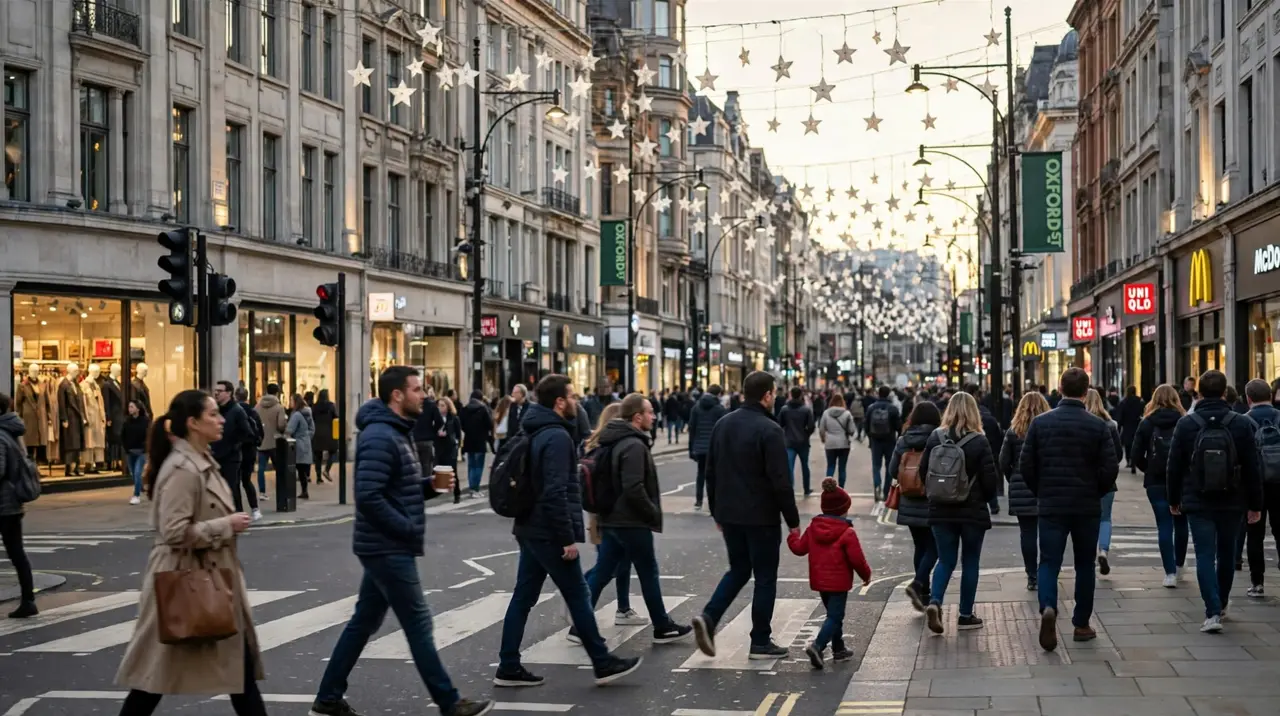
Almost 1km (0.62 miles) of the shopping street, stretching between Orchard Street and Great Portland Street, has been closed to vehicles by the mayor's Oxford Street Development Corporation. Seven days on, transport officials describe the public response as "phenomenal".
Some shoppers have welcomed the change, and a number of stores report higher footfall. Backers of the scheme describe continuing cycle traffic as teething troubles, while opponents contend the project is badly designed and has lengthened journey times.
Helen Cansick, who heads investment planning at Transport for London (TfL), said the scheme was in "the first week of a very long programme of investment and transformation". She added: "We're going to see 50 new trees by the spring, more benches and seating area and then over the course of time we will completely improve the place, level all the road surfaces and make sure it's a really beautiful space that people can enjoy."
The finished scheme is expected to cost £150m, with highway changes included in that figure. London's mayor, Sadiq Khan, called the 26 October launch a "momentous day for London" and said it represented the first stage of moves to rescue the street from "decline".
Numerous shoppers and visitors told BBC London they approved of the changes, describing the street as safer and more agreeable now that traffic has gone.
Yet worries remain about people continuing to ride bicycles along the street, and no enforcement was visible when BBC London visited on Monday morning.
Tom Fyans, of the London Cycling Campaign, said: "It feels a bit quieter than a week on.
"I think cyclists are getting used to the idea that they can't cycle down this route and they'll be finding alternative routes.
"You're going to get a handful who are not going to follow the rules and we need to keep working on that.
"But given that there are thousands of cyclists coming through each day previously, I think we're going to see a few teething problems and eventually that will get better."
A TfL spokesperson said earlier that riders were "obliged to follow the rules", adding: "We are working with dockless hire companies and delivery companies to ensure this is made clear and will continue to monitor and review as required,"
According to TfL, barriers and signage are being used alongside work with e-bike hire firms to "enforce strict geo-fencing" inside the pedestrian zone, which would cut or reduce power to dockless e-bikes entering it and oblige riders to push them.
Besides the cycling issue, there have been reports of anti-social behaviour, with some incidents posted on social media. BBC London also saw an ambulance being sent around the closed section while answering an emergency call on Monday morning.
Longer journey times
Opponents have voiced concern about the scheme's broader effect on travel through the West End, above all for bus passengers and other road users.
Michael Bolt, of the Marylebone Association, said: "Bus users have lost a number of routes, which means they've already got an extra 5-10 minutes on interchanges.
"Now they're finding that the time it's taking to get through the area is increasing substantially."
The mayor took over Oxford Street from Westminster Council and has said the plans will keep being tested and refined. The council says finding safe alternative routes for cyclists remains difficult.
Westminster Council deputy leader Tim Barnes said: "At the moment, we just don't know where this level of bike traffic can sensibly go.
"It's not just about looking at where in any one stretch they should be, it's how you create continuous paths.
"The problem with taking Oxford Street out was that it was London's primary east-west route.
"Every journey time is going to be longer as a result of that. Buses are taking longer, taxis are taking longer, emergency vehicles are going to take longer to get where they need to be.
"Cyclists are just one of the many users who are going to lose out in terms of journey times and convenience."
The Mayor's Office said the scheme would keep being reviewed and refined, and that further major works are not due to start until spring.
Source: