New asbestos finds at Parliament as MPs are pressed to back £40bn restoration
The BBC has learned that further asbestos has been found in Parliament, at a time when MPs are being pushed to give the go-ahead to a large-scale renovation of the dilapidated seat of UK democracy.
Ewan Somerville (Political reporter) Updated 25 nov
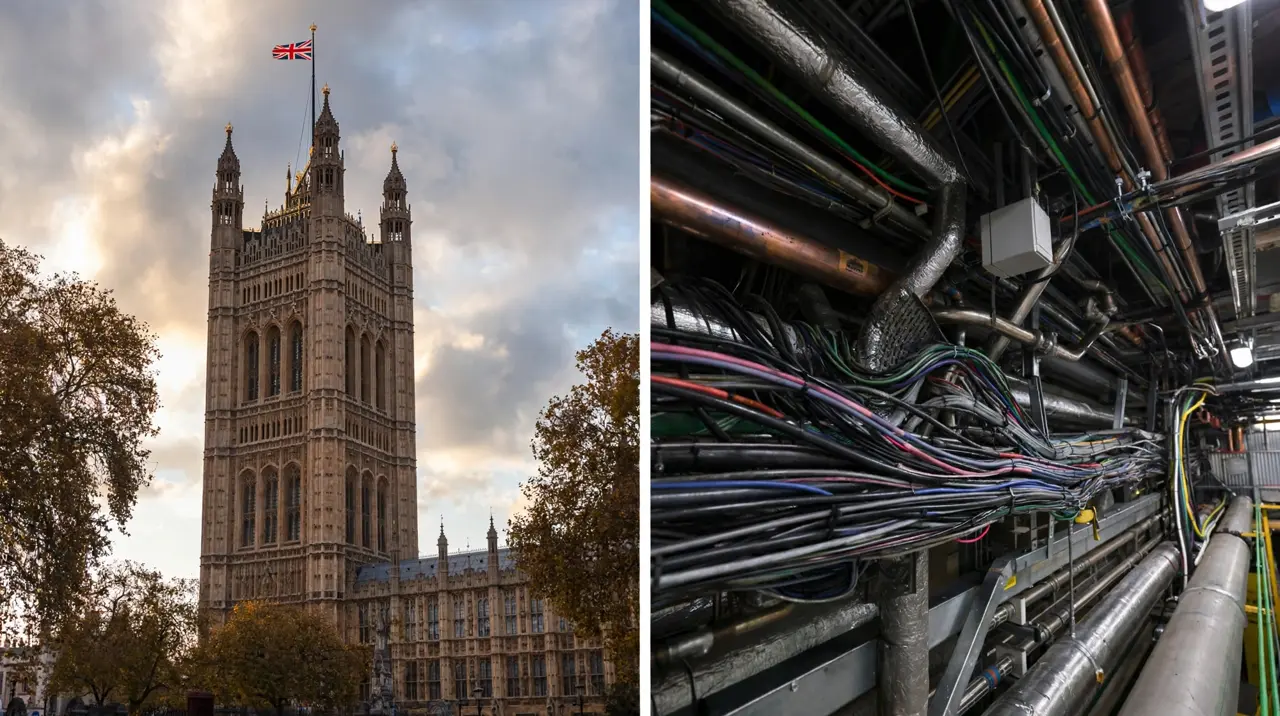
The BBC has learned that further asbestos has been found in Parliament, at a time when MPs are being pushed to give the go-ahead to a large-scale renovation of the dilapidated seat of UK democracy.
Known asbestos materials in the Palace of Westminster and the wider parliamentary estate - including insulation, roofing, floor tiles and ropes - now total more than 1,650, an increase of 500 since 2021.
The disclosure comes as the government weighs whether to hold a vote on refurbishing Parliament, a project that could take 61 years and cost up to £40bn, following years of hesitation and postponement.
This week the Commons public accounts committee warned that Parliament's restoration had reached "crunch time", and that each further year of delay costs taxpayers £420m.
Parliamentary authorities said the additional asbestos items were discovered in surveys carried out in preparation for the long-awaited refurbishment.
Asbestos has been named as one of the principal reasons for the refurbishment, because of the risk to human health when its fibres become airborne. Although asbestos is largely fireproof, fire and heat around it can send fibres over long distances.
According to a Freedom of Information request by the BBC, 700 asbestos items have been taken out of Parliament over the past five years, yet the overall total has still gone up.
Under Health and Safety Executive guidelines, most of the material is classified as low risk because it sits in concealed areas where it is less likely to be disturbed, but almost 200 items are rated medium risk, meaning remedial works may be needed.
A spokesperson for UK Parliament said its "absolute priority is the safety of the those who work on and visit the parliamentary estate", citing better asbestos monitoring, new awareness training and plans for further removal.
Kris Gledhill, whose mother, former Labour MP Alice Mahon, died in 2022 of malignant mesothelioma - a cancer linked to asbestos exposure - told the BBC "asbestos should never be considered low risk".
"A precautionary approach should be adopted: this includes assessing the fact that in addition to the risks from buildings deteriorating over time, there are also risks of damage from extreme weather events, floods and fire, and from disturbances caused during renovation and maintenance work," he said.
"Alice was well aware of the risks relating to asbestos and mesothelioma," he added.
"She was able to identify two workplaces where she might well have been exposed, one of which was the Palace of Westminster."
Commons authorities told the BBC that "an asbestos-free building cannot be achieved in practice", since doing so would mean demolition or extensive damage to the building's fabric.
Dr Hannah Moody, chief executive of the charity Mesothelioma UK, which campaigns on asbestos-related diseases, said she supports a national asbestos register and the phased removal of asbestos from public buildings.
"Although asbestos was banned in 1999, it remains present in many public buildings across the UK and continues to cause serious illness and work-related deaths, including from the aggressive cancer, mesothelioma," she said.
She added that workers should receive health and safety advice on managing the risks.
'Notre Dame-like flames'
The figures emerged as the Commons Public Accounts Committee published on Wednesday the findings of its inquiry into Parliament's restoration and renewal (R&R) programme, which is examining ways to revamp the site.
Geoffrey Clifton-Brown, the Conservative MP who chairs the committee, told the BBC that a small fire in the building would mean "the whole lot would go up", with 24-hour fire patrols in operation.
"Consider the impact of global rolling news footage of Notre Dame-like flames licking out of the building's roof, resulting in the destruction of our heritage, or worse, injuries or loss of life," he added.
He described this as a "real and rising... grave risk" and criticised "a political allergy to gripping the nettle" over refurbishing Parliament after years of delay.
The committee said MPs and peers already had enough information to vote on a way forward before the end of this year.
The BBC understands government whips have discussed holding a debate and a vote by then, but no date has been set.
Such a vote would determine whether to go ahead with up to £3bn of initial works and to reduce four current options, before a final decision by 2030.
One option would involve MPs and peers leaving the site for as long as 24 years from 2032, at a cost of up to £15.6bn.
Another would move only the House of Lords out of the building, at a cost of £39bn over 61 years.
Among the "critical" setbacks the committee identified were an overly complex decision-making process and delays in securing a temporary home for the Lords at the nearby Queen Elizabeth II conference centre, which is owned by the government.
Source: