Minister promises new law to set safeguards for live facial recognition
Sarah Jones said the government's consultation indicated the public "by and large" backed LFR, although people wanted reassurances about how it is applied. The Metropolitan Police says the technology is "making London safer" and has led to more than 3,000 arrests in the past two years. Privacy…
Sonja Jessup (London home affairs correspondent) Updated 25 nov
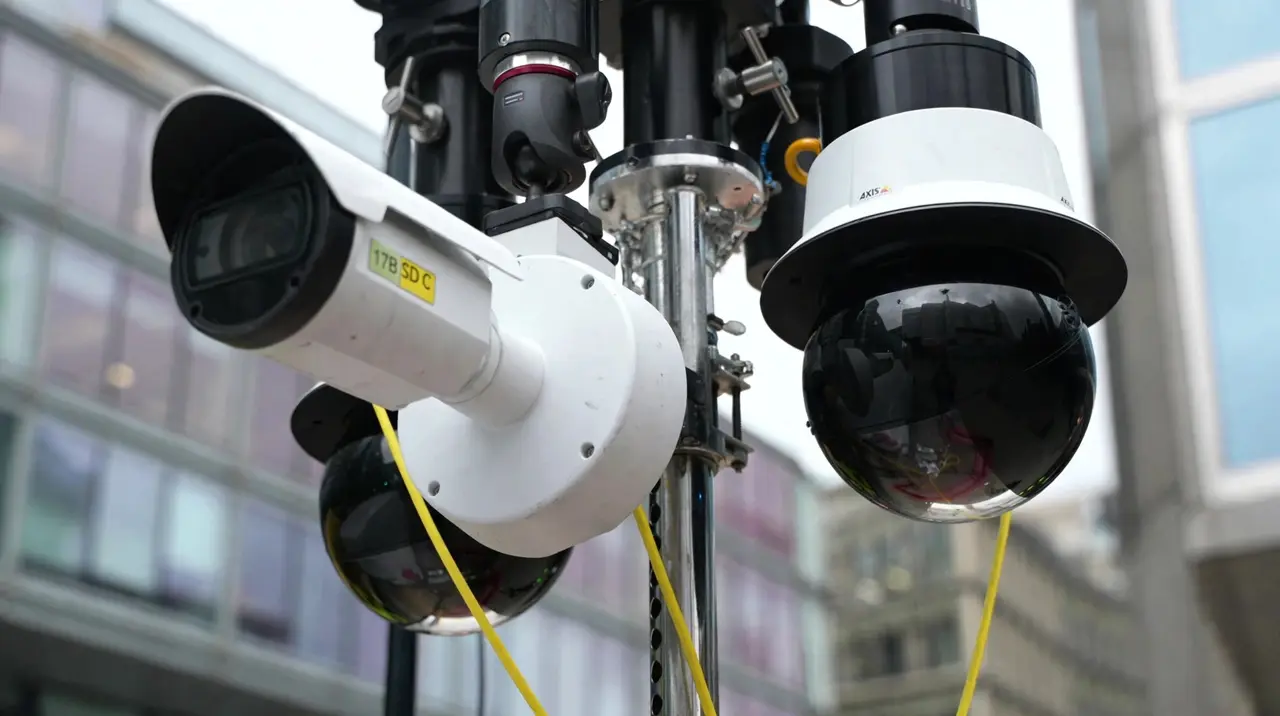
Sarah Jones said the government's consultation indicated the public "by and large" backed LFR, although people wanted reassurances about how it is applied. The Metropolitan Police says the technology is "making London safer" and has led to more than 3,000 arrests in the past two years. Privacy campaign group Big Brother Watch argued instead that it "is treating everyone who walks by as a suspect by default - you have to prove that you're not someone that the police is looking for".
The government opened a public consultation last December on a future legal framework for LFR and is now setting out its response. Campaigners had previously condemned what they called an "alarming escalation" in police use of the technology, which maps a person's unique facial features and matches them against faces on watchlists.
Jones, the MP for Croydon West, told BBC London that where concerns had been raised they were "around proportionality, how far and wide are you going to go with this technology, what could it become".
She said the legislation would establish "parameters and principles" for what LFR is used for, including catching wanted criminals and searching for missing people. Jones added: "For example, if I had an outstanding parking fine, I would not expect this technology to be used for that. We have to use it proportionately. We have to use it in an intelligence-led way. And I think we also have to be clear that there will be some oversight."
The Home Office said a new independent watchdog would provide scrutiny and could, in extreme cases, pursue enforcement action against police forces to block their use of LFR.
Jasleen Chaggar, senior legal and policy officer at Big Brother Watch, told BBC London: "The way in which facial recognition technology works is it's an indiscriminate tool which scans the face of every single person who walks by the camera. And that's doing something that's fundamentally un-British, because in this country you have the presumption of innocence."
She said "thousands of people have expressed their objection to the use of this technology and the government have sat on those responses for over six months". Chaggar added: "All the while, facial recognition has been rolled out in train stations and Tube stations and shops and supermarkets across the country. We all want serious criminals off the street, but this technology puts the burden of policing on law-abiding citizens. Why should people who have done absolutely nothing to arouse the suspicion of the authorities have their identity biometrically checked, in a way that's as sensitive as giving away your fingerprints or your DNA, just as they go about their daily lives?"
Over the past two years the Met has widened its deployment of LFR, mostly by sending vans to chosen sites around the capital, where cameras scan the faces of people walking through the area. If a face matches someone on a database of wanted criminals or missing people, officers are alerted and double-check the result before deciding whether to stop the person. The Met said faces that do not match are deleted instantly.
In April the force won a High Court battle against privacy campaigners seeking to limit its use of LFR. Youth worker Shaun Thompson and Big Brother Watch director Silkie Carlo brought the challenge over concerns the technology could be used arbitrarily or in a discriminatory way, but the High Court rejected claims that the Met had broken human rights and privacy law. After that ruling, Commissioner Sir Mark Rowley said the "government will want to carefully consider how they continue to enable rather than over regulate technologies".
Civil liberties and anti-racism groups have raised concerns about potential racial bias, criticising the use of LFR at Notting Hill Carnival and arguing it could be "less accurate for women and people of colour". The Met insists the National Physical Laboratory has assessed its operation of the technology as accurate and fair, and says deployments at Carnival this year led to more than 120 arrests, with over 270,000 faces scanned and one false alert recorded according to data on its website.
Jones said police currently operate under a "patchwork" of "piecemeal legislation" and that a specific law would improve public confidence while supporting officers. "At the moment, the Met will have one way of doing things and other forces will have different ways of operating. So there'll be some consistency. It will be easier for the Met to know what they can and can't do."
The Home Office said a legal code of practice would be drawn up for police, with a separate code for private businesses using facial recognition to tackle crime. In August, Sainsbury's suspended its use of the technology at one store in East Dulwich after a customer was wrongly challenged as a shoplifter and asked to leave; the supermarket said the mistake was caused by human error.
Nick Fisher, chief executive of Facewatch, the UK's largest provider of the technology to retailers including Sainsburys, welcomed the announcement. "Facewatch has been hoping the government would not create a regulatory gap between police and private-sector use of facial recognition, and this announcement allays those concerns," he said. "Clear rules, independent oversight and accountability are vital to public trust, alongside recognising the technology's role in preventing crime and protecting shop workers."
Met Police Deputy Commissioner Matt Jukes told BBC London that LFR had been "delivering a safer London" over the past two years. "We've made over 3,000 arrests using this technology and we're particularly controlling the behaviour of some dangerous people: registered sex offenders, who we're picking up and identifying in breach of their conditions."
In December the Met plans to expand its use of static live facial recognition cameras to the West End and Soho following a pilot in Croydon. Attached to street furniture such as lampposts, the cameras can be operated remotely, although a team of officers on the ground is still required to check any "matches" are correct. Jukes said the exact locations in the West End were still being discussed but that Oxford Street was "obviously" under consideration, adding that the move would improve safety for Christmas shoppers.
He said officers were also piloting handheld devices that could help confirm the identity of suspects on the spot, and added the Met was keen that any new legislation would not restrict police in responding to different types of crime. "We've been talking to government; we're confident that they've listened to our perspectives on that, and so far we feel what's coming forward is a framework that we'll be able to work with, but also keep informing, keep innovating."
Source: