London Underground strike concludes, with seven more walkouts scheduled through February
Tube drivers belonging to the Rail, Maritime and Transport (RMT) union began their walkout at noon on Thursday and stopped work at noon on Friday.
James W Kelly, Gem O'Reilly, Tom Edwards (London transport and environment correspondent)
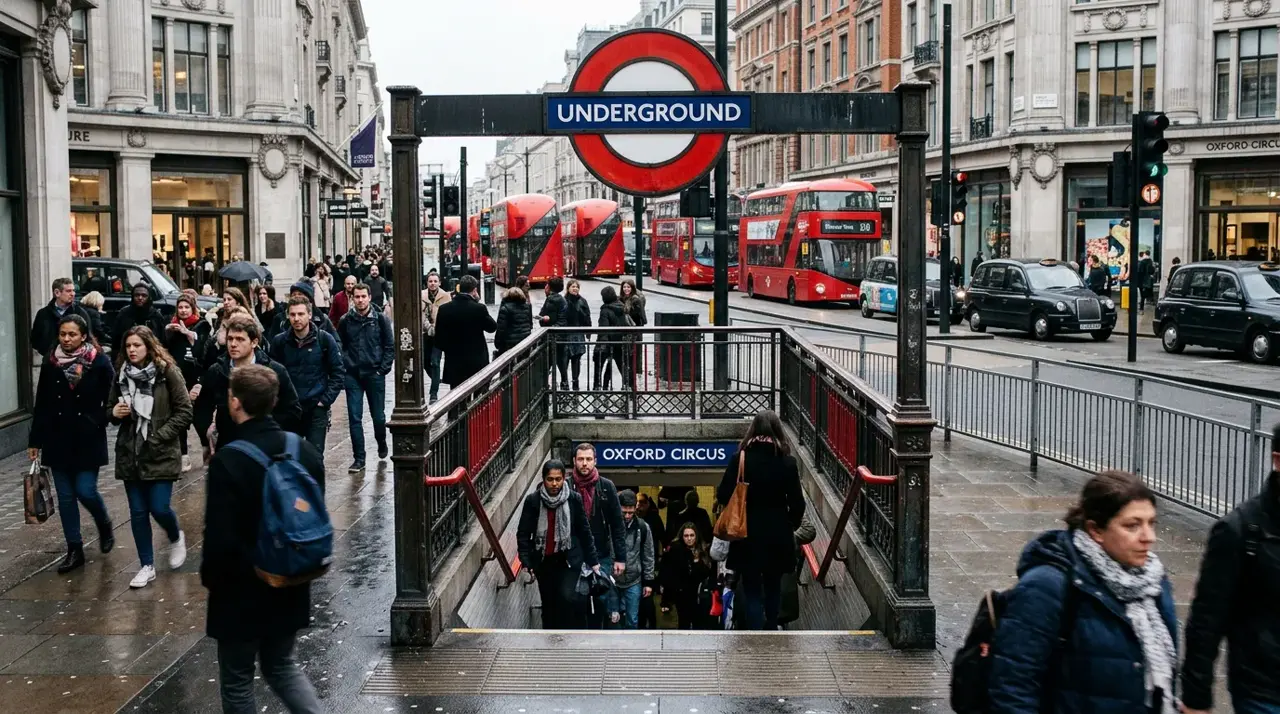
Tube drivers belonging to the Rail, Maritime and Transport (RMT) union began their walkout at noon on Thursday and stopped work at noon on Friday.
The action stemmed from a disagreement between the RMT and Transport for London (TfL) concerning revised terms and conditions linked to the option of working four or five days a week.
On Friday, six Underground lines were suspended or partially suspended, while five others reported delays. TfL forecast disruption until 18:00 GMT "as services start to recover".
'On our knees'
Simon Mitchell, chief executive of hospitality organisation Kerb, said the strike could not have come "at a worse time" for businesses. Kerb runs Seven Dials Market in Covent Garden, in London's West End.
Mitchell told BBC London that Thursday saw a "big drop" in footfall and he expected the same on Friday. He described it as a "really hard time for all hospitality businesses", noting that although the walkout lasted 24 hours, it had hit two trading days.
He said the December walkouts were "planned for the best week of trading in the whole of Christmas and what would be our best week of the whole year". Mitchell urged the RMT to cancel the strike, adding "we're on our knees".
According to TfL, more drivers booked in for their shifts during the walkout than in earlier industrial action, and over 55% of the Tube network ran on Thursday.
Disruption on Friday morning was widespread as expected, but the Jubilee and Victoria lines departed on schedule and every line was running services before 06:30 GMT, ahead of TfL's forecast. Although a reduced Piccadilly service and the absence of any Waterloo & City line service pulled the average down, the network was said to be running just over 40% of services on Friday morning up to 09:00.
Network usage on Thursday reached 90% of normal levels, with Tube passenger numbers at roughly two thirds of the usual figure.
Forest, which runs e-bikes in London, reported a 17% rise in rides on Thursday evening compared with the same period a week earlier. Uber also recorded increased demand as a result of the walkout.
Two unions represent London Underground train drivers: Aslef and the RMT. Only RMT members took part in the Thursday and Friday walkout, since Aslef has accepted TfL's voluntary compressed four-day week and had previously said it was "surprised that the RMT has decided to take this action". Aslef mainly represents Tube train drivers, while the RMT also covers operational, engineering, maintenance and station staff.
The row followed TfL introducing a new framework giving drivers the choice of a four or five-day week. The RMT backed the framework in principle but objected to alterations to existing terms and conditions. It also raised concerns that remaining under the previous arrangement would bring changes in working practice, including the relocation of depots.
General secretary Eddie Dempsey has said: "RMT is not opposed to a genuine four-day working week that benefits our members, but we will not accept it being used as a vehicle for job cuts, intensified working and the erosion of terms and conditions."
TfL stated that the changes to working patterns were voluntary. A spokesperson said: "Any suggestion otherwise is misleading the public in order to justify strike action over proposals that would give Tube drivers more time off and create a more modern, efficient Tube service."
Some commuters faced delays for work and missed appointments on Friday morning. At King's Cross, the reduced service managed demand, with no platforms packed with passengers waiting for delayed trains.
Ollie, a stall trader outside King's Cross, said the walkout had made trade "really slow" as fewer people came through and spent money at stalls. With Christmas approaching, he said this was an important period for traders as more visitors visited London's Christmas markets. He said: "I think holding Tube strikes like so often is a bit excessive and I don't think there's really any need for it."
Amelia, who works at The Flower Station bakery stall outside King's Cross station, shared that view. "I think it affects a lot more people than they realise," she said of the strike. "I appreciate that they obviously have their reasons for striking, but it impacts a lot more people than they think - not just people getting to and from work, but businesses like us."
In Finsbury Park, travellers were seen running for buses and attempting to board the limited number of Tube services operating. One young woman waiting for a bus said she feared missing her A-level mock exam.
"I'm just stressed out, I need to get to school immediately. I need to get the bus but they aren't working, so I'm just standing here," Aya told BBC London.
"I'm going to be late so I'll have to explain it to the teachers, but hopefully they'll understand."
'Really stressful'
Marie, also at Finsbury Park, said she had been left "waiting for buses that don't show up". She was attempting to get home with her guinea pigs after picking them up from a sitter, having just returned from a trip to Morocco. She had travelled to the sitter by Lime bike but wanted to take a bus home with her pets.
She said the strike "makes life really complicated and stressful". Asked about the seven remaining walkouts due over the coming months, Marie said it "just complicates our lives". She added that the impact went beyond simply getting to the office, describing it as "almost impossible" to travel across London to see friends when strikes take place.
Listen to the best of BBC Radio London on Sounds and follow BBC London on Facebook, X and Instagram. Send your story ideas to [email protected]
Source: