London's race to build safer AI
Well before AI became a common subject in the headlines, London was already quietly establishing itself as a centre for AI safety.
Meghan Owen (London work and money correspondent) Updated 25 nov

Well before AI became a common subject in the headlines, London was already quietly establishing itself as a centre for AI safety.
As AI systems grow more capable, an expanding network of researchers, policymakers and campaigners in the capital has concentrated on a connected goal: making sure such models help society rather than do damage.
London, increasingly labelled Europe's leading AI hub, hosts Google DeepMind, and Anthropic has also built a major base in the capital.
The London AI Hub, a co-working space and community for AI entrepreneurs, reports that as many as 50 organisations in the capital now concentrate on AI safety.
Among them is the UK's AI Security Institute (AISI), characterised as the first state-backed body that evaluates leading models both before and after release for dangers such as cyber misuse. Apollo Research is another, examining whether AI models might act against human interests by lying or cheating.
The London Initiative for Safe AI (LISA), a non-profit that backs and links people working in AI safety, is also preparing to move to a large headquarters in King's Cross, within the capital's expanding "AI corridor".
As warnings about the technology's potential dangers intensify, the question is whether these efforts will genuinely have an impact on the global stage.
The government has unveiled new funding of hundreds of millions of pounds for AI safety and security, covering work on threats that range from cyber-attacks to the prospect of advanced systems operating beyond human control.
Biology is one area increasingly worrying researchers. AI might speed up the discovery of new medicines and vaccines, but experts have also warned that it could make harmful pathogens easier to develop.
In response, the government is set to establish an AI Biosecurity Lab. Basecamp Research, an AI biology company based in a former watch factory in Farringdon, central London, is among the organisations involved.
Together with OpenAI and Anthropic, Basecamp Research will help create antibiotics and vaccines to guard against future pandemics and to get "ahead of emerging threats".
Co-founder Oliver Vince expects this to "put the UK at the forefront of the intersection of AI and biology", especially in the fight against harmful pathogens.
He considers London a key player in AI security thanks to its "opportunity, culture, history and expertise".
The company is one of numerous AI startups concentrated in the capital.
Rupert Elston of the London AI Hub, a community and co-working group, puts the number of those focused on AI safety at up to 50, which means the city has become "not just a player in the global AI game, but also something of a referee".
"The boundaries are very clearly defined. That creates an environment where people want to come and build, and helps attract talent as well."
'London makes me optimistic'
The capital's expanding role in AI safety, and in applying the technology responsibly, is drawing growing attention.
On BBC Radio 4's Desert Island Discs, mathematician, author and science broadcaster Prof Hannah Fry said she stays optimistic about AI because "something is happening in London".
"The UK punches well above its weight in scientific expertise and technological ability. We are a global hub."
She also said London was following a different route from San Francisco's "race-to-the-bottom hyper-capitalism", concentrating instead on "ethical technology for good, focused on things people care about – from finding cures for cancer to developing better batteries. And all of that is happening right here on our doorstep."
Fry added: "I think we'll be buffeted by some really big forces over the next few years, but I know these scientists and I'm excited by what they're coming up with."
The infrastructure challenge
Nevertheless, London's ambitions for AI safety run into several obstacles.
Gina Neff, professor of responsible AI at Queen Mary University of London, identifies access to cutting-edge AI models before they reach the public as one of the biggest difficulties researchers face.
"It shouldn't just be a few people in northern California who set the terms of the future for the rest of us," she says.
She refers to the UK's record of creating regulatory "sandboxes", where researchers and policymakers can trial emerging technologies in controlled settings before wider deployment.
Neff, who also serves as deputy chief executive of Responsible AI UK, warns that constructing a world-leading AI ecosystem will depend on the data centres backing it.
Those facilities raise their own issues, above all the enormous quantities of energy they use.
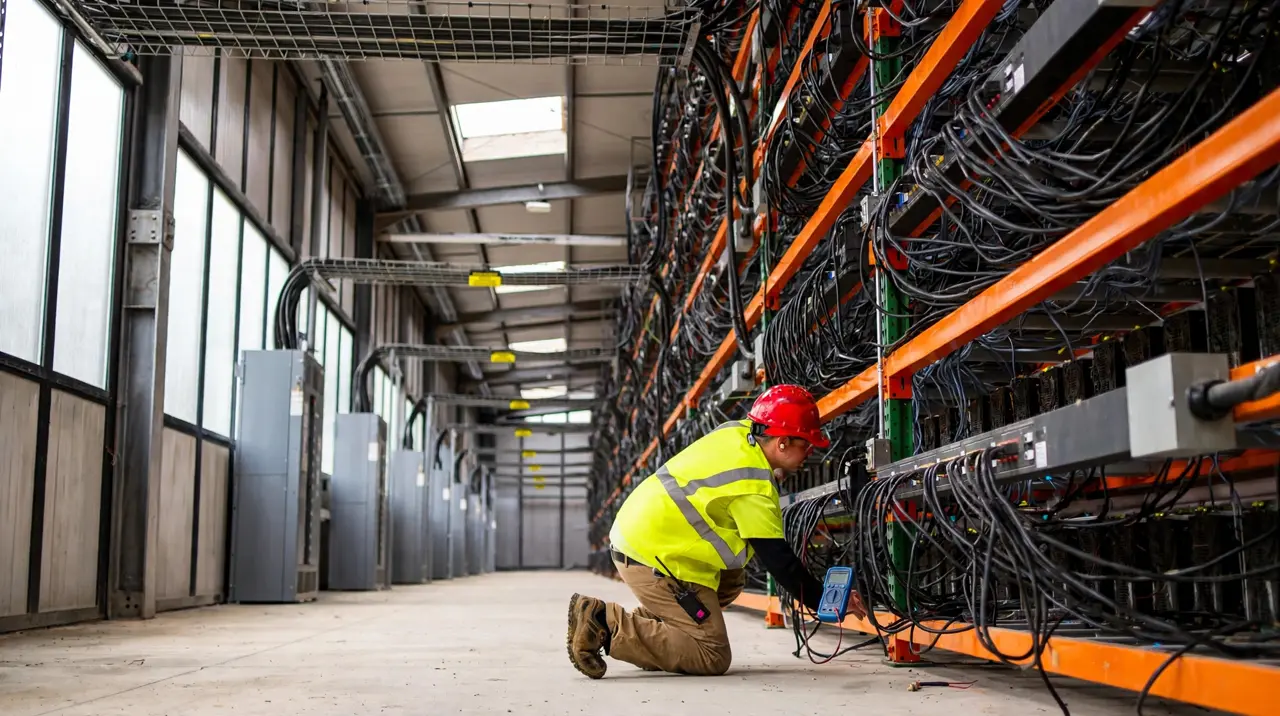
A report commissioned by the Greater London Authority, London's Data Centre Future Growth Forecasts and Strategic Insights, points to heavy pressure on the capital's energy network, warning that "energy is the single most critical constraint on London's data centre growth".
Despite these difficulties, many of London's leading universities are also eager to keep pace, and to do so responsibly.
Imperial College London president Hugh Brady says "AI is rapidly permeating every aspect of what we do. It's embedded in our education programmes, driving and accelerating much of our research, and at the heart of many of our start-ups."
Brady reckons that more than 750 people at Imperial work either directly on large language models (LLMs) or on their applications.
'The train has left the station'
While acknowledging AI's huge potential, he is equally clear about the risks.
"In the wrong hands, AI could be used to design something harmful to humans, the food chain, the environment or our water supply... something we haven't encountered before."
Even so, he is convinced AI has to form part of the answer.
"The train has left the station," he says. "All of this has to happen at greater speed than ever before."
Activist Joseph Miller argues that London's historic connections to effective altruism – a movement seeking the most impactful ways to help others – together with its top universities and large student communities, have made it one of the world's leading centres for AI safety.
He organised his first protest outside Google DeepMind's offices with a friend in 2021.
Five years on, he heads Pause AI UK, a group demanding a pause in the development of frontier AI models until, in his words, "we know how to make them safe".
The movement has expanded quickly since then. "We have hundreds of people joining every month," he says.
Pause AI's most recent London protest, in February, drew around 300 people. The next demonstration, scheduled for Saturday, is anticipated to attract a bigger crowd.
A spokesperson for the Mayor of London, Lord Khan, said: "London has the talent, universities and businesses to lead the way in using AI responsibly.
"The government's additional £120m for the AI Security Institute will strengthen the UK's ability to test advanced AI systems and understand the risks they pose.
"The mayor wants Londoners to share in the opportunities AI brings. That's why he set up the London AI and Jobs Taskforce to look at how AI is changing the way we work and how Londoners can prepare for those changes."
Listen to the best of BBC Radio London on Sounds and follow BBC London on Facebook, X and Instagram. Send your story ideas to [email protected]
Source: