London Fire Brigade lacks resources to assess and protect heritage sites, City Hall hears
City Hall has been told that the London Fire Brigade (LFB) lacks the resources required to properly assess and safeguard London's heritage sites against future blazes.
Kumail Jaffer (Local Democracy Reporting Service) Updated 25 nov
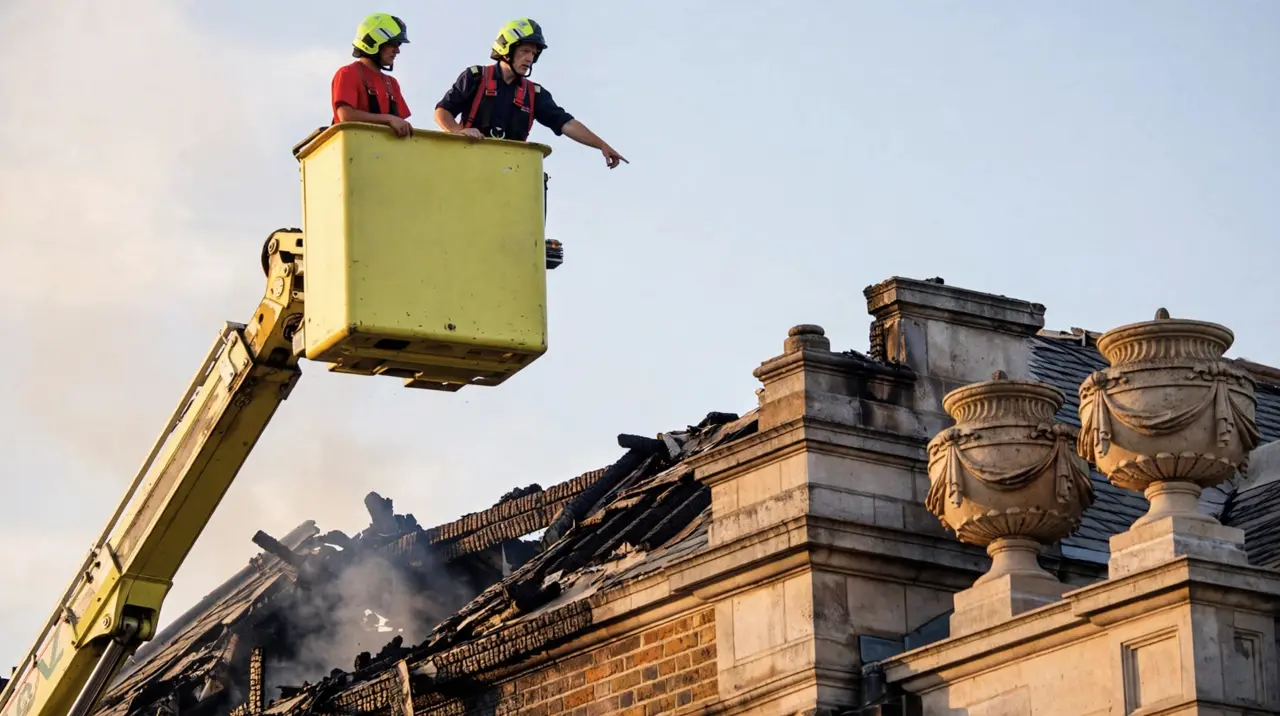
City Hall has been told that the London Fire Brigade (LFB) lacks the resources required to properly assess and safeguard London's heritage sites against future blazes.
Last year, more than 800 fire incidents occurred in or within 50ft (15m) of a heritage site, and such buildings generally do not meet the requirements of current fire safety regulations.
In recent years, the capital has seen fires at Somerset House in 2024, at the Grade II* listed St Mark's church in St John's Wood in 2023 and at Battersea Arts Centre in 2015.
According to the Local Democracy Reporting Service, the London Assembly Fire Committee heard on 21 October that it was "not possible" for the brigade to assess every heritage building across the capital.
Professor José Torero, head of department of civil, environmental and geomatic engineering at University College London (UCL), said: "They are trying the best they can, but the reality is also that the level of complexity and uniqueness of these buildings it is most likely going to escape their level of expertise."
"You are talking about buildings like the Houses of Parliament or Westminster Abbey," said Torero, who is also a fire safety engineer. "It is not possible that they can provide this service with the resources that they have."
He added: "Pretending that a small group within the LFB, with the modest capacity they have to elevate their training, can handle a problem of that nature, is like trying to cover the sun with your hands."
Torero said heritage buildings were most often treated "like conventional buildings", with decisions taken without considering how to refurbish and retrofit the building safely. He added: "Generally, we don't necessarily identify the weak points that can result in a disaster."
Current guidance from the LFB and fire heritage experts advises that protecting people from fire while preserving a building's historic character requires "a balanced approach, taking account of both fire safety and heritage conservation."
Charles Harris, national fire adviser at Historic England, suggested to the committee that the LFB's limited resources meant it was looking at buildings which would present a risk to life if there was a fire, such as care homes and hospitals.
An LFB spokesperson said protecting heritage buildings was a shared responsibility among building owners, premises managers, councils and fire brigades.
They said: "Through our dedicated heritage work, fire safety officers engage with those responsible for historic buildings to promote effective fire safety measures, share specialist guidance and encourage robust emergency and salvage planning."
"We also carry out familiarisation visits and salvage exercises at heritage sites to ensure firefighters are prepared to respond effectively should an incident occur."
"We welcome any measures that help strengthen the protection of these important buildings for future generations."
The LFB said prevention was the "best way to protect London's historic and culturally significant buildings" and described fire protection as a "shared responsibility".
The London Assembly Fire Committee has launched a call for evidence as part of its investigation into fire risk management in London's heritage buildings.
BBC Radio London programmes can be heard on Sounds, and the outlet can be followed on Facebook, X and Instagram. Story ideas can be sent to [email protected].
Source: