London Ambulance Service Reports Sharp Rise in 999 Calls
According to the service, the three days up to the point of the declaration brought about 500 more 999 calls than the equivalent days a week earlier, with daily totals exceeding 7,300 for three days running from Monday.
Joe Skirkowski (London) Updated 25 nov
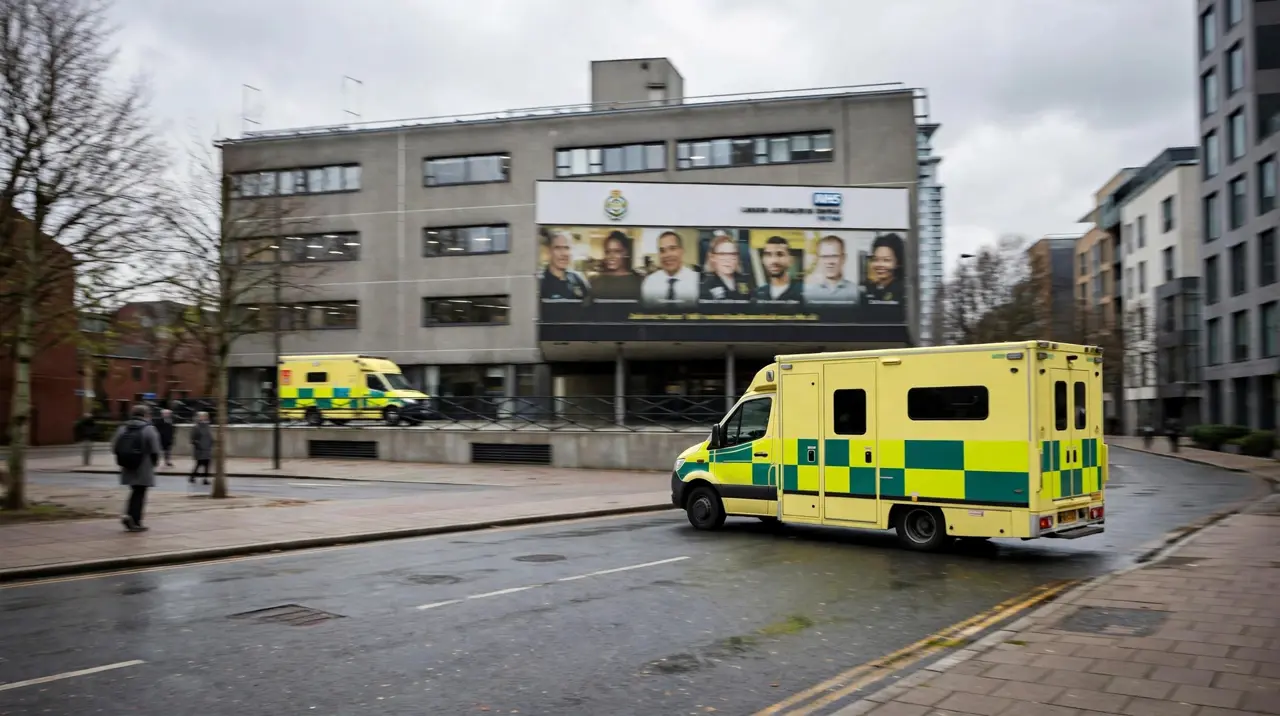
According to the service, the three days up to the point of the declaration brought about 500 more 999 calls than the equivalent days a week earlier, with daily totals exceeding 7,300 for three days running from Monday.
Cases involving respiratory illness classified as life-threatening climbed by nearly 20%, while emergencies involving immediate danger to life, such as cardiac arrest, rose 10% against the same period a year ago.
"The number of calls has remained very high for several days, so we have declared a critical incident to take extra steps to reach patients who need us most urgently," said Craig Harman, chief operating officer at LAS.
"We are increasing the number of clinicians caring for patients over the phone and working closely with hospitals to speed up handovers [which] helps us get crews back out to patients more quickly," he added.
Part of the service's winter plan involves sending out additional ambulance crews and control room personnel, alongside the use of AI tools to assist with taking notes on patients.
A critical incident is declared when disruption or extra pressures, including a surge in demand, place patients and staff at greater risk.
Once declared, it allows the LAS to take measures to restore normal service levels and to seek outside assistance if required.
'Sicker than usual'
Stuart Critchton, director of emergency operating services at LAS, said that new cold and flu variants were contributing to the high demand.
"We've been experiencing an increase in demand over the last few days, which isn't unusual this time of year," he said.
"However what we have today is sicker patients waiting for ambulances.
"We've seen an increase in flus and colds that are really affecting Londoners at the moment and definitely causing patients to be sicker than we've previously seen.
"Elderly, young children and patients with pre-existing conditions can be affected in a greater way and that's what we're seeing in terms of more vulnerable patients presenting sicker than usual."
The public is being advised to keep using 999 for life-threatening situations, while less urgent health issues should be directed to NHS 111, a GP or a local pharmacy.
Those who qualify for flu vaccination are also being urged to accept the offer.
Earlier in the year, the LAS recorded its busiest day on file, when severe summer heat helped generate 8,869 emergency calls in a single day.
Listen to the best of BBC Radio London on Sounds and follow BBC London on Facebook, X and Instagram. Send your story ideas to [email protected]
Source: