Kenyan man wrongly convicted of attack on British couple says Met Police 'destroyed my life'
Ali Kololo, a Kenyan woodcutter who was wrongly convicted and sentenced to death over an assault on a British couple, has told the BBC that the conduct of London's Metropolitan Police in the case destroyed his life.
Jean Mackenzie
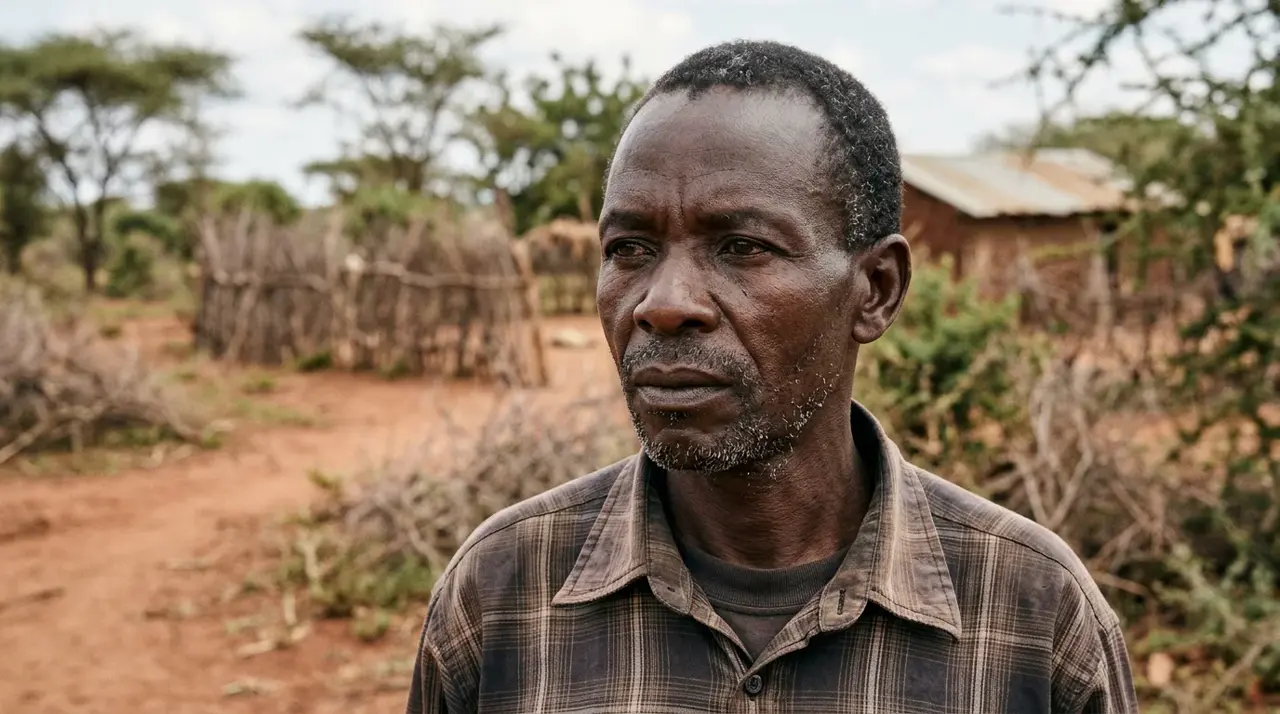
Ali Kololo, a Kenyan woodcutter who was wrongly convicted and sentenced to death over an assault on a British couple, has told the BBC that the conduct of London's Metropolitan Police in the case destroyed his life.
In 2011, Somali gunmen broke into the beach bungalow of David and Judith Tebbutt on the Kenyan coast. David was shot dead and Judith was abducted and held captive in Somalia for six months.
Detectives from the Met travelled to Kenya to help with the inquiry, and evidence they gathered contributed to Kololo's conviction. He remained in prison for more than ten years before it was overturned.
Kololo is now taking legal action against the Met, alleging that senior officer and former Detective Superintendent Neil Hibberd gave misleading testimony at his trial and acted unlawfully to obtain his conviction.
In his first interview with the media, he spoke to the BBC about the 15 years he has endured and his campaign for compensation, which the Met is opposing in court.
We met on Lamu, a small island off Kenya's northern coast that was once a busy Swahili port. Today, people and goods still travel through its narrow stone streets by donkey rather than car.
Kololo was handed a death sentence here, in 2013. Standing at the jetty where police once landed him in handcuffs, he says he savours his freedom, though rebuilding his life remains difficult.
"Everything was taken from me. I'm starting from zero. I don't think I'll ever go back to who I was before," he says.
Before his arrest, Kololo lived with his wife and their three young children. He had worked as a groundskeeper at the resort where the Tebbutts were staying, but by 2011 he earned his living by felling trees in a local forest and selling the timber.
"My life was very good," he says. "I was fending for myself, taking good care of my family."
Kenyan police detained him within 24 hours of the attack.
"I was beaten with clubs and thrown into a car," he says. "They beat me for days, burning me with cigarettes, forcing me to confess to things. They subjected me to torture like no other."
Kololo is illiterate. He says officers made him press his thumbprint onto a statement asserting that he had guided the attackers to the Tebbutts.
"I didn't understand anything," he says, calling the statement "a mountain of lies". "I signed it without knowing what it was because of the state they had put me in".
The Kenyan police told us it "at all times strives to work within the law". Kololo is not suing them.
A Met team under Detective Superintendent Neil Hibberd, then in the role, reached the country within days of the attack to back up the Kenyan investigation. The UK government had told the officers not to accept information from Kenyan authorities that had been extracted by interrogating detainees.
However, Hibberd asked for Kololo's statement and later relied on it when testifying for the prosecution at the trial.
Hibberd also gave evidence in court connecting Kololo to the attack. He told the Kenyan court that Kololo had worn a type of shoe matching footprints found in the sand at the resort.
The officer who arrested Kololo stated that he was barefoot when handed over to police. Hibberd did not reveal that the Met's own forensic analysis could not determine whether the shoe had produced those marks.
At the outset of the trial, Kololo had no legal representation. He had to question every prosecution witness himself, including Hibberd, through an interpreter who spoke Swahili, a language that is not Kololo's first.
"I believe I was framed because I am a poor man and I did not have the strength or means to fight for myself," Kololo says.
He was found guilty of kidnap and robbery with violence, becoming the only person ever convicted in connection with the attack. He spent three years on death row before his sentence was reduced to life imprisonment.
Kololo recalls looking at his prison file and seeing the word "death" written in the space for the expiry date.
"I was completely heartbroken. I believed I could be executed at any moment, and I would never see my family, my children, ever again."
In later years, the UK's Independent Office for Police Conduct (IOPC) determined that Hibberd had withheld significant forensic evidence at the trial. It concluded that he would have had to answer a case of gross misconduct, but disciplinary proceedings were impossible because he had already retired from the force. At the time, his lawyer said Hibberd absolutely disagreed with the report's findings.
In April 2023, Kenya's High Court overturned Kololo's conviction because of doubts about the prosecution evidence. The decision followed years of work by the legal charity Reprieve and by Kenyan lawyer Alfred Olaba, who represented him without charge.
Judith Tebbutt, who believed Kololo was innocent, backed them. In a 2022 interview with the BBC, she said he had been scapegoated by Scotland Yard.
"He was not there on the night. He was not part of the group that held me. They've put this man in prison without any real evidence."
More than three years after his release, Kololo says he still bears the consequences of the torture and the decade he spent in prison. As we walk the narrow lanes of Lamu's old town, his thin frame moves stiffly and he appears tense. "My mind is not good," he says. "I have not recovered."
He remembers being held in a filthy cell infested with bedbugs alongside as many as eight other prisoners, a place he thought he would never leave. He contracted tuberculosis twice and came close to death on both occasions.
Now too frail for the woodcutting that once sustained him, Kololo tries to grow enough food on the land around his home, though irregular rainfall makes this hard.
"I have nothing. On the days I get food, I eat, and on the days I don't, I endure."
He lives on his own in a mud hut. His wife divorced him after his imprisonment, and their children moved in with his mother. They left school because the family could not meet the fees. Kololo says they were barred from visiting him in prison. After his release, they hardly recognised him, least of all his youngest child.
"They were too young. Only now are they starting to regain the memory that 'this is our father who disappeared'," he says. "If it weren't for my mother, my children might have died."
For much of our time together, Kololo is remarkably cheerful. He has faith that his lawyers and God will deliver justice. But the subject of the Met changes his mood.
"I am extremely angry with the police," he says. "I'm also angry with the Kenyan Police. They collaborated to incriminate me. What [Hibberd] said destroyed my entire life and my children's lives."
The Met has neither apologised to Kololo nor admitted wrongdoing. The force is contesting his compensation claim, which his lawyers warn could take years to settle.
"These people falsely accused me. Do I not deserve something?" he asks.
The Met told the BBC that neither the force nor Hibberd wished to comment on Kololo's claim, but it added: "Our thoughts are with Mr Kololo, Mrs Tebbutt, her family and all those who have been affected by this terrible crime. The Metropolitan Police remains committed to supporting the Kenyan authorities in any way that may be possible, in order to get justice for Mrs Tebbutt and her late husband."
Preetha Gopalan, Reprieve's head of UK litigation, calls the Met's conduct in the case "egregious".
"They've spent 10 years trying to evade accountability in every way possible, now dragging him through the courts," she says. "It's possible for them to do the right thing, but they are unwilling, and so this ordeal continues to haunt Kololo and his family."
"Even if I get a billion shillings, I will never be the same," Kololo says. "But if I get the justice I deserve, I can help my children and take care of myself when I am an old man."
You may also be interested in:
Go to BBCAfrica.com for more news from the African continent.
Follow us on Twitter @BBCAfrica, on Facebook at BBC Africa or on Instagram at bbcafrica
Source: