"Just give us our pensions and we'll go away": civil servants left waiting as Capita backlog grows
After 41 years in the civil service, Adele Dolby had planned to enjoy her retirement with her husband Alan. Instead, the 60-year-old from Bradford has been living off savings and has taken out a £10,000 hardship loan "just so that we can pay the mortgage, keep the heat, feed ourselves and have some…
Aisha Iqbal (Bradford political reporter)
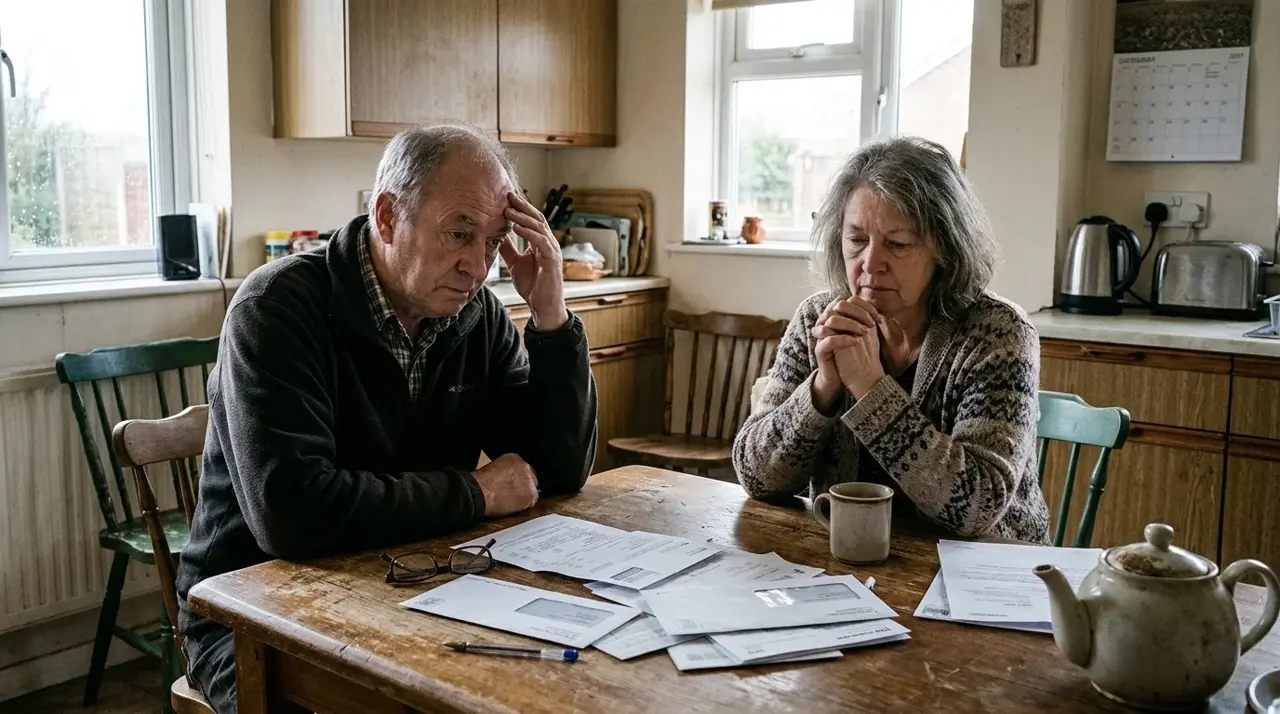
After 41 years in the civil service, Adele Dolby had planned to enjoy her retirement with her husband Alan. Instead, the 60-year-old from Bradford has been living off savings and has taken out a £10,000 hardship loan "just so that we can pay the mortgage, keep the heat, feed ourselves and have some sort of normality", she says.
Adele is one of thousands of current and former civil servants hit by delays since outsourcing giant Capita assumed responsibility for administering the Civil Service Pension Scheme on 1 December last year.
The £239m government contract, awarded under Rishi Sunak's Conservative government, has struggled since the handover under the current government.
As the first anniversary of the handover approaches, more than 150,000 cases remain outstanding, recovery deadlines have been missed and a fresh parliamentary inquiry into the backlog is examining what went wrong.
In recent days, MPs have renewed demands for action, and Capita announced the departure of chief executive Adolfo Hernandez, who acknowledged the firm had "not delivered" for Civil Service Pension Scheme members.
'Everything's paused'
For Adele, the pressing question is how she and her husband will manage financially.
"Once you retire, that's it. Your money stops coming in so I haven't had any income since June," she says.
With Christmas approaching, the couple must rethink their plans for celebrations with their three grown-up children.
Adele says the situation has become so severe for some that they are turning to food banks.
She previously worked for HM Revenue and Customs (HMRC) and the Government Legal Department in Shipley and Leeds.
She submitted her pension paperwork in February, four months before her planned retirement date, and has been waiting anxiously ever since.
"You wait for the letterbox to rattle, hoping your quote comes through the letterbox," she says.
Husband Alan, 62, also faced delays. He waited almost a year between applying and eventually receiving his lump sum in October.
Together, the couple have provided roughly 60 years of public service.
"We've dedicated our lives, our careers, to the civil service, and this is the thanks you get," Adele says.
"We should be moving into the next chapter of our lives, but we're on hold. Everything's paused."
After BBC Politics North made inquiries, Adele was informed that her final pension quote had been issued.
That marks progress, but payment may not be imminent, with other scheme members reporting waits of several months after receiving their quotes.
Adele's local MP, Labour's Imran Hussain, who represents Bradford East, has raised both her and her husband's cases with ministers.
"People should not be forced to rely on hardship loans while waiting for pensions they have earned over decades of public service," Hussain said.
'There is desperation'
A Facebook support group with at least 23,000 members who say they are in a similar position to Adele perhaps illustrates the scale of the issue.
Londoner David Hollingbery and Sarah Teasdale, originally from Lincolnshire but now living near Birmingham, are both members of the group. As campaigners, they hear countless accounts of hardship, but they also have personal experiences to share.
Sarah, who spent almost 25 years in the civil service, was made redundant in June.
She says her pension quote left out 23 years of service, and she cannot access one of the interest-free hardship loans launched for those in difficulty.
"I've been living on savings for the past few months," she says.
Sarah shares various testimonies, including an anonymous post from a former Department for Work and Pensions employee who described struggling to pay their rent.
"My food cupboard is almost depleted," they wrote, explaining that they had bought their granddaughter's birthday present from a charity shop.
"No shame in that, but this wasn't the retirement I expected," they added.
Sarah says: "What you're seeing in there is desperation."
David, a former HMRC investigator, received his pension three months after retiring but has continued campaigning for others.
"If apologies were pound notes, we'd all be fine now," he says.
He is also keen to challenge assumptions about who is affected.
"If you've ever applied for a driver's licence and got one, or a passport, or claim benefits, a civil servant has done that for you," he explains.
Those hit include prison officers, emergency call handlers, child support workers and staff supporting veterans, among many others.
How did we get here?
The history of the Capita crisis stretches across successive governments.
In 2012, under the David Cameron-led coalition government, civil service pension administration was transferred to MyCSP, a public service mutual.
At first, the government held 35%, private sector company Equiniti owned 40% and employees owned 25%.
Equiniti took majority ownership in 2014, and Theresa May's government sold the remaining government stake in 2018.
Capita had previously run the pension payroll before that responsibility moved to MyCSP in 2014, and administrative problems already existed under MyCSP.
The new contract, awarded in November 2023 under Rishi Sunak, permitted a two-year transition.
But in October 2025, Parliament's Public Accounts Committee (PAC) warned that Capita might not be ready, since only one of eight transition milestones had been completed in full and on time.
The handover went ahead regardless last December.
How big is the problem?
The Civil Service Pension Scheme counted about 1.7 million members as of March 2024.
Capita inherited a backlog of roughly 89,000 cases, and by 16 November this year the outstanding caseload had grown to about 156,000, including 32,600 regarded as complex cases.
Campaigners say the crisis is also hitting civil servants who remain in work, with some postponing retirement because they fear being left without an income.
What is being done to sort it out?
A government recovery taskforce was set up in January, with extra civil servants deployed to assist Capita.
The projected cost of that support through the end of the 2026-27 financial year is £12.5m.
The government has also previously withheld £9.9m in contractual payments.
Clive Betts, Labour MP for Sheffield South East and deputy chair of the PAC, characterises Capita's performance as a blend of "incompetence and disinterest".
"Every single time they've given us a deadline, they've missed the deadline," he says.
He backs returning pension administration in-house, while acknowledging that would take time.
"Past governments have left themselves open to this problem because they've had no in-house alternative to private companies that deliver poor services."
Campaigners broadly agree urgent action is needed, but they differ over whether removing the contract from Capita is the answer.
"Part of our campaign has never been about insourcing. It's always been to get people paid, to get people paid on time," says Sarah.
She worries that returning the service in-house too soon could cause further disruption, and stresses that "a credible and working escalation scheme" should come first.
She adds, however, that she believes the Cabinet Office should be planning for full government takeover "in case things go wrong".
A Cabinet Office spokesperson described service levels since the handover as "completely unacceptable".
They said extra government support was in place, with almost 2,000 complex cases closed in the past fortnight.
"Our immediate priority is to stabilise the service," the spokesperson added.
What does Capita say?
Capita told the BBC it was "deeply sorry" for the frustration caused to scheme members and their families.
A spokesperson said: "We have made progress, but there is still a lot more to do and the service is still falling short for members."
The company said it was prioritising those who had waited longest and those facing financial hardship.
Capita would continue working with the Cabinet Office until members received the reliable, timely service they expected, the spokesperson added.
For Adele, though, the delays reach well beyond her own financial difficulties.
"I know there are a lot of other people in that situation, and we've got members that are going to food banks," she says.
"There's the stress, the worry and the mental health issues that people are now having, because, you know, how long do they have to wait?
"They're living from hand to mouth with no money and no future.
"Just give us our pensions. That's all we want. Just pay us and we'll go away."
Listen to highlights from West Yorkshire on BBC Sounds, catch up with the latest episode of Look North.
Source: