Jury blames fatal delay after 999 call sent officers to wrong crash site
Sachin Kalia, 19, Davina Kaur Ruprah, 24, and Kiranjeet Sagoo, 36, were killed in a collision on the A13 in east London on 15 July 2024.
Updated 25 nov
Sachin Kalia, 19, Davina Kaur Ruprah, 24, and Kiranjeet Sagoo, 36, were killed in a collision on the A13 in east London on 15 July 2024.
A jury at Walthamstow Coroner's Court concluded that the fatal crash might have been prevented if officers had been directed to the correct site of an earlier incident and had arrived in time to clear it.
The jury also determined that the deaths resulted from a driver losing control at high speed in poor weather conditions and colliding with the victims' vehicle.
According to the jury, the fatal collision could have been prevented had a Ford Transit van not been left in the central reservation following the first incident.
Kalia, a bartender and student from Barking, Ruprah, a paralegal from Dagenham, and Sagoo, a customer service adviser from Ilford, were pronounced dead at the scene in Wennington Marshes, Rainham.
During the inquest, the court heard that the first crash occurred at around 21:10 BST, when the driver of a speeding BMW 1 Series lost control and struck a Ford Transit, which came to rest on the central reservation, slightly overhanging the outside lane.
A passing motorist phoned the Met seven minutes afterwards and twice specified that the first crash site was the Wennington junction between the A13 and the A1306.
Coroner Nina Persaud issued a prevention of future deaths report, highlighting concerns over the failure to log the correct location.
According to her, the call handler did not enter Wennington junction in the "remarks" field, and the computer system wrongly recorded the location as the Dagenham junction between the A13 and the A1306.
As a result, officers attended the wrong location and found no evidence of the incident, even after checking one additional junction in each direction.
She wrote: "Had the officers been provided with the correct location, they would likely have arrived before the time of the second collision.
"If they had arrived before the second collision, the officers were trained to park their car in the 'fend off' position, so as to slow the traffic in lanes two and three, and minimise the risk to other road users."
She added that the officers might also have cleared the Ford Transit from the central reservation.
"Therefore, had the MPS officers attended the correct location, it is likely that the fatal collision could have been avoided."
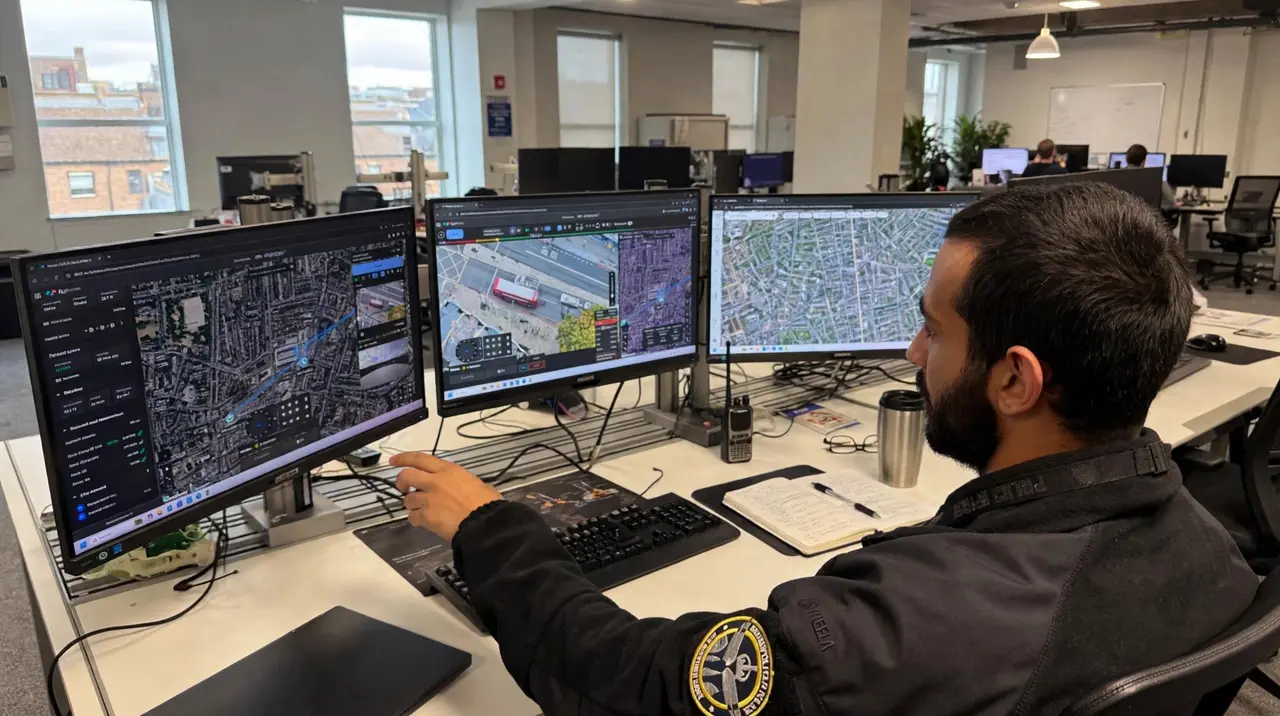
The error was identified by the force later on the day of the crash, but the supervisory team did not discuss it with the call handler or offer feedback, training or extra supervision.
The coroner noted there was "a great deal of confusion" over the exact location and heavy reliance on mobile phone location systems, which can be imprecise and "raise the risk of call handlers not giving full attention to the information provided by the caller".
She said the exact location was eventually pinned down using the What3words location sharing system.
In reply to the coroner's concerns, the Metropolitan Police stated that it "acknowledges the seriousness of the recording error and the absence of immediate supervisory intervention".
The force said the call handler, who first became aware of the mistake at a meeting with the Met Command and Control (MetCC) inquest team on 24 July 2025, would complete a structured period of "learning through reflection".
The call handler has also chosen voluntarily to contribute to training material for other operators on the potentially grave outcomes of failing to record full details accurately.
That material is being added to the MetCC Academy training syllabus and to professional development days for staff.
The force added that What3words has now been formally included in its training syllabus, and every new call handler is taught to ask for, recognise and use the codes.
Revised guidance and training stress that callers' verbal descriptions must take priority, with mast data regarded only as a supplementary indicator.
Training has also been expanded to cover mapping skills, triangulation techniques, identifying road networks and landmarks, and using digital tools to confirm a caller's location when details are unclear or contradictory.
Listen to the best of BBC Radio London on Sounds and follow BBC London on Facebook, X and Instagram. Send your story ideas to [email protected]
Source: