Jodie Burrage: online abuse is so routine she no longer fears for her safety
Jodie Burrage turned to three sources of support after her first WTA Tour singles defeat in 16 months: a doctor, a physiotherapist and her phone.
Russell Fuller (Tennis correspondent) Updated 25 nov
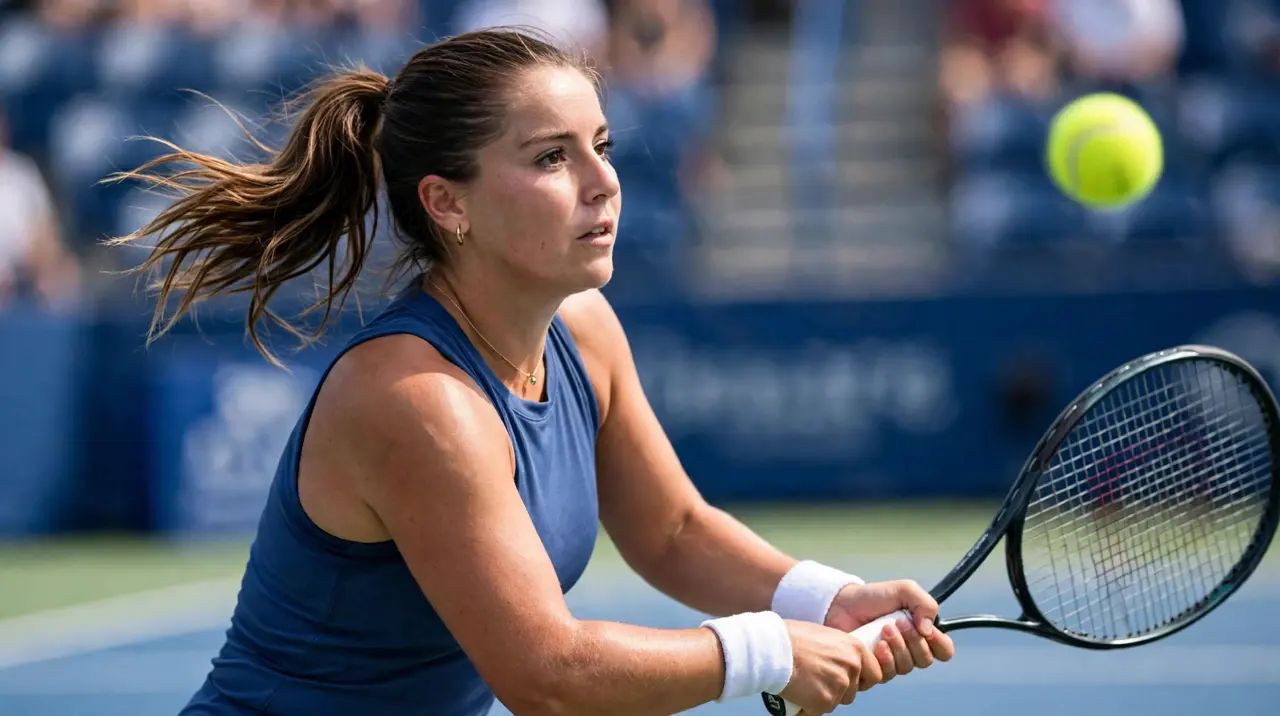
Jodie Burrage turned to three sources of support after her first WTA Tour singles defeat in 16 months: a doctor, a physiotherapist and her phone.
On social media, she found messages pledging punishment and others threatening her life following her 3-6 6-3 7-5 loss to Indian wildcard Vaishnavi Adkar.
"I try not to actually read what they say," Burrage told BBC Sport from Chennai, where she remains in the doubles competition.
"Because we are so used to it - which is really quite sad - I don't fear for my safety.
"You've got to have thick skin. There was some brutal stuff that was said, but I don't take it to heart.
"Sometimes it hurts more than others. If you've already got other stuff going on, or you're not in a great place, and that is put on top of everything else - this tour is tricky enough as it is."
She said her blood pressure "tanked" towards the end of the match, and posted screenshots of the abuse on Instagram to draw attention to a problem professional players face routinely.
"It happens every match - whether it's win or lose," the 27-year-old Briton said.
"Playing in Wrexham [on the World Tennis Tour last month], I won three matches [and] lost one. But after every single match there was some sort of abuse.
"I think that's where tennis players get it pretty hard - because in tennis you can bet on so many things."
Abuse directed at players, especially from furious gamblers, has been a long-standing issue. Fellow British player Katie Boulter told the BBC last year that she faced abuse and death threats on a near-daily basis.
A report published this year by the WTA and World Tennis, drawing on data from the Signify Group's Threat Matrix service, found that "angry gamblers" accounted for 42% of all verified abuse detected during the 2025 season.
That figure has fuelled unease about sponsorship agreements some tournaments have signed with gambling companies. The Davis Cup, for instance, has an official sports betting partner, and in August the self-described "prediction-market platform" Kalshi agreed a multi-year deal with the US Open.
Burrage argued that social media companies "should do more to help".
"I think an ID should be put on every Instagram account, and then that way it makes more people more accountable for their actions on that platform," she said.
"I think it would limit what people would say. People should be accountable for what they say and that's where I think there could be more of a push to change.
"It's only getting worse."
Every WTA and World Tennis player can use Threat Matrix's services, which track social media posts aimed at players. The first priority is a swift evaluation of whether someone's safety is at risk, allowing the service to notify platforms and, where necessary, law enforcement agencies about offending content.
Names may also be passed to gaming companies, giving them the option of excluding offenders from their platforms.
Coverage can include direct messages and account moderation, so that certain messages never reach players at all. However, the system has gaps, and some players would prefer to be informed of any threats made against them.
Burrage has recently climbed to a singles ranking of 474, having fallen as low as 888 in July. A nine-month injury lay-off kept her out of singles, and illness hampered her return during the grass court season.
Still, she refuses to let the abuse derail her progress.
"I'm at a place where it's all bigger picture for me and everything I'm doing now is to have a good season in 2027," she added.
"I'm building a team that is really good around me. They know where I've been, what I've gone through.
"It's not what you want, but if I have to go through it, then I will."
Source: