Fungal infection blamed for collapse of 131-year-old oak in Peckham Rye Park
According to Southwark Council, a 131-year-old oak that recently fell in Peckham Rye Park was brought down by a fungal infection. The authority is still investigating whether ongoing waterlogging in the vicinity had any part to play.
Updated 25 nov
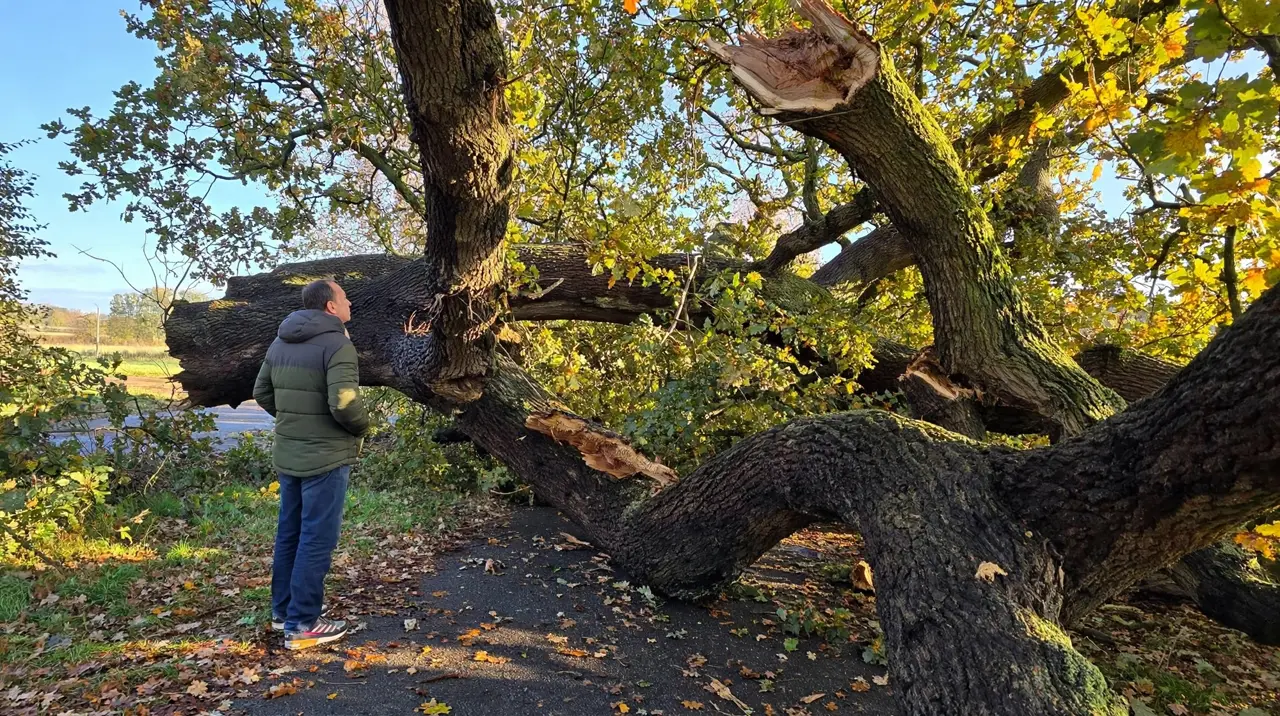
According to Southwark Council, a 131-year-old oak that recently fell in Peckham Rye Park was brought down by a fungal infection. The authority is still investigating whether ongoing waterlogging in the vicinity had any part to play.
The south London council reported that the tree was infected with Ganoderma applanatum, a fungus responsible for irrecoverable decay in the roots and the lower trunk.
Councillor Eloise Waldon-Day said she was "really saddened" by the loss of the mature oak, describing it as "an emotive loss for local people".
"We're investigating what caused the tree to fall. We are strongly committed to protecting trees in Southwark for the benefit of everyone," she said.
Earlier assessments carried out by the council had identified substantial internal decay in the tree. Officers nevertheless decided it could be kept in place once steps were taken to reduce safety risks, such as maintenance work and inspections on a more regular basis.
The oak was also located near an area where persistent waterlogging had been reported by members of the public on social media.
Southwark Council said that water pooling turned into a notable problem last winter, prompting an inquiry into the source of a possible leak. Pumps were subsequently put in to clear away surplus water, with as much as 6,000 litres a day being diverted from the site when the issue was at its worst.
The council explained that investigations conducted with Thames Water and specialist teams have not yet established the cause. Groundwater, a natural spring, park infrastructure and Thames Water assets are all among the explanations still under consideration.
After the tree came down, examinations revealed that decay had extended into its key structural roots.
While Southwark Council identified the fungal infection as the main reason for the oak's collapse, work continued to establish whether waterlogging had altered the conditions around the tree.
A Thames Water spokesperson said: "We will assist in any investigation if requested, although Southwark Council has said its initial investigations indicate that disease was the primary cause of the tree's fall, rather than any escape of water from a Thames Water asset."
The council added that there were no immediate safety concerns regarding other trees in the vicinity, though additional assessments were being carried out as a precaution.
Listen to the best of BBC Radio London on Sounds and follow BBC London on Facebook, X and Instagram. Send your story ideas to [email protected]
Source: