East London flats evacuated over structural concerns remain without homes
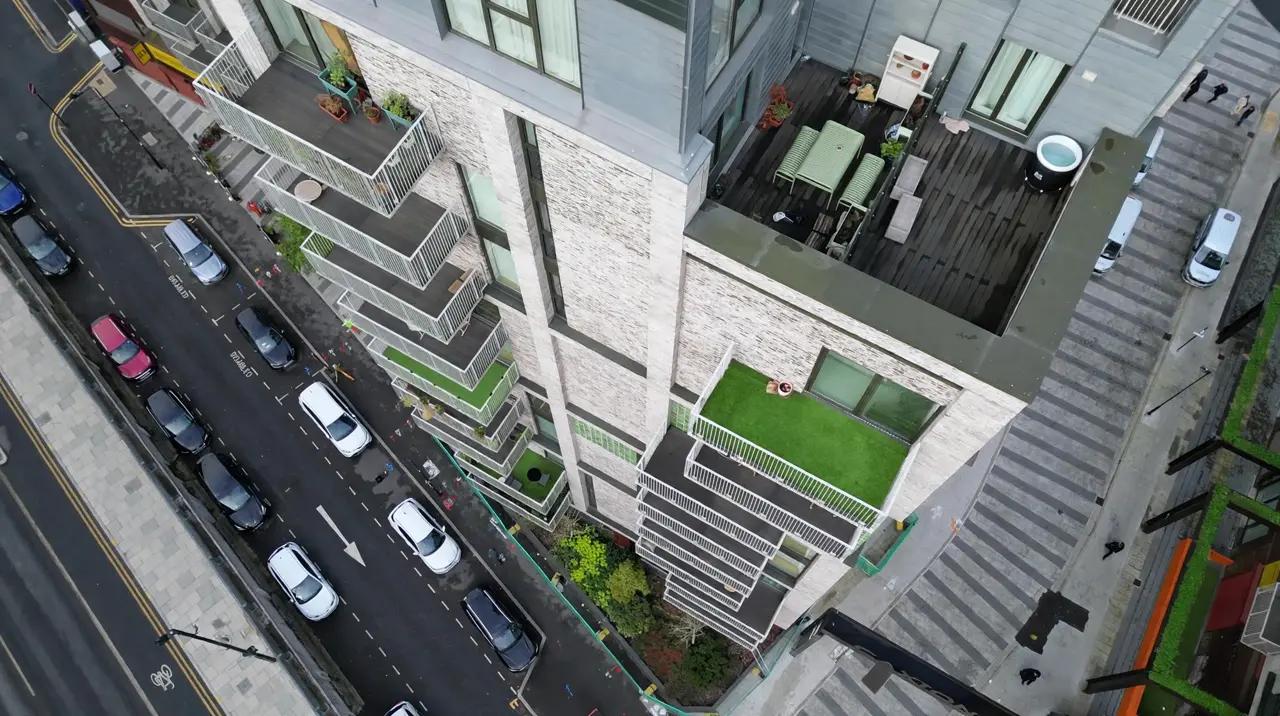
Residents of an award-winning high-rise development in east London remain without housing after structural problems were found at the Royal Gateway, also called Caxton Works, in Canning Town, Newham. The complex was built less than 10 years ago and has been described as "at risk of sudden collapse".
Ayshea Buksh (London) Updated 25 nov
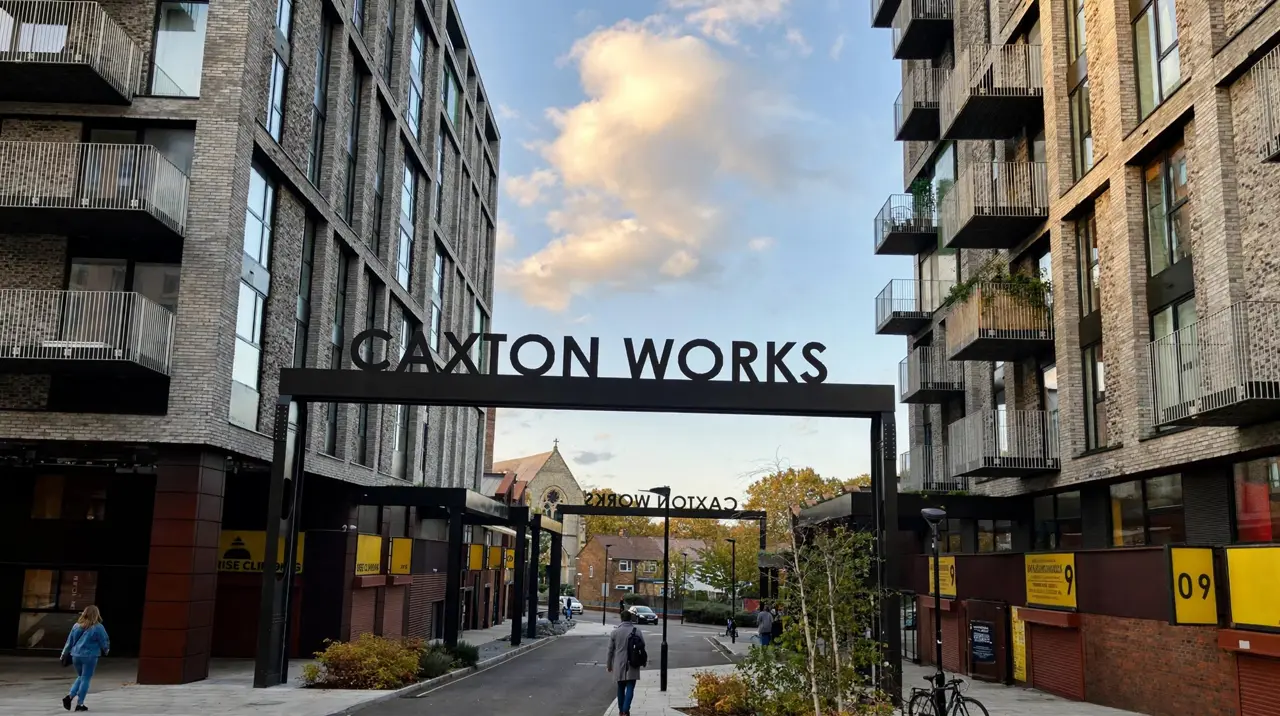
Residents of an award-winning high-rise development in east London remain without housing after structural problems were found at the Royal Gateway, also called Caxton Works, in Canning Town, Newham. The complex was built less than 10 years ago and has been described as "at risk of sudden collapse".
Last month, occupants were ordered to leave, some during the night by London Fire Brigade, because the buildings were "unsafe". Commercial tenants were also told to vacate their premises.
Engineers raised concerns about reinforced concrete "transfer slabs" that support the buildings. The same construction method has drawn scrutiny at other London developments.
Galliard Homes, the property company that built the scheme, says it is working to "investigate the concerns and develop potential solutions" and is providing financial and practical assistance to residents. It remains unclear when people will be permitted to return.
Giorgio Tarantino, who has rented a two-bedroom flat at the site for over seven years, received an email stating the building was unsafe and that he had to leave.
"I didn't know what to do," he says. "I just got my passport and my laptop and put them in a backpack."
The singer and content creator is now relying on friends on the outskirts of London but cannot remain there indefinitely.
"It's very stressful but the uncertainty makes it 100 times worse."
At the Royal Gateway, one-bedroom flats can command roughly £2,000 a month, while a two-bedroom flat was recently listed for sale at £450,000.
Sam Ward and her husband purchased their flat at Prince Court just over three years ago. They were also told to leave by email once structural defects came to light.
"I don't know much about engineering but I just got the kids out and I'm very grateful we are all OK," she says.
The concert pianist, who runs her own music business from home, is currently staying in a hotel with her husband and two young children while looking for more permanent accommodation.
"It's very traumatic and upsetting to be displaced like that," she says. "Hopefully one day we'll move back, when it's fixed."
Numerous other residents depend on hotel rooms or other short-term arrangements. BBC London has learned that, notwithstanding the safety concerns, some people are still occupying the blocks because they have no alternative.
Danielle Gregory, of Tower Blocks UK, which has assisted some residents, describes this as a "yet another chaotic evacuation of a dangerous structure".
Having herself been displaced from the Ledbury Estate in Peckham, she questioned whether building owners were considering the long-term consequences, noting the group had encountered "lots of these" cases in the decade since the Grenfell fire disaster.
BBC images reveal cracks in certain concrete ceilings, which are being held up by steel reinforcements.
Structural engineers said suspected flaws left the buildings at "risk of a sudden collapse".
The review was initially carried out for registration with the Building Safety Regulator, established after the Grenfell Tower fire disaster, and is now a legal requirement for every high-rise building over seven storeys or 18m high.
Prime Property Management informed residents that engineers had examined "the original structural drawings for the buildings and identified concerns with the transfer slab" on which three blocks are built.
The company added that two further blocks "sit on a separate transfer slab" and "calculations show these slabs are undersized and significantly overstressed".
"Nobody should be living in or using the buildings while further investigations and works take place," they added. "Nobody has taken this decision lightly."
Galliard Homes constructed the Royal Gateway Caxton Works development on a former industrial site in Canning Town, an area reshaped by extensive redevelopment since the 2012 Olympics.
Promoted as an "exciting regeneration project", it consists of five buildings of up to 11 storeys, with 336 flats above 13 commercial units.
Studio Egret West received a design award for the scheme, although the technical design and construction stages were later handled by the now-closed Tooley & Foster Partnership, according to Architects Journal.
Occupants include private rental tenants and leaseholders, while the independent businesses span a children's nursery, a yoga studio, a climbing wall and restaurants.
Newham Council holds the freehold and granted planning permission in 2013.
The leaseholder, Caxton Works Development Ltd, is registered at the same address as Galliard Homes in Loughton, Essex.
The transfer slabs sit above the ground-floor businesses and car parks.
Josh Akapo, who works at Rise Climbing, a bouldering wall and cafe, says it is "really scary" because one of the defective slabs is directly above the premises, and obtaining assistance has been "frustrating".
"It's great when we talk about the success of regeneration in east London but if the building is not built properly and we are unsafe... then what is the point?" he says.
The spaces were initially advertised by commercial property firm Camel Projects as "attractive modern work spaces with large windows and exposed concrete finishes".
Natalia Bareikis, who operates a community wellness space, pays over £5,000 a month in rent.
"We're all self-employed, she says. "We run small independent businesses. We don't have big corporate backers."
She has shifted her classes online but continues to struggle.
"All we want is answers but no-one wants to take responsibility," she says.
Reinforced concrete transfer slabs have been employed in high-rise residential and mixed-use developments for more than 20 years. They enable large open areas beneath residential towers, since supporting columns do not have matching columns directly below them.
Patrick Hayes, of the Institution of Structural Engineers, says the design is not inherently unsafe but can be the "most efficient and cheapest way" to construct such buildings.
The failure mode, termed "punching shear", can result in partial collapse, though no collapses have been recorded to date and evacuations are ordered as a "precaution", he says.
He explains that inspections during certain cladding remediation works exposed cracking and deflection, and the institute identified instances of "poor design practices and poor construction". New guidance was issued in 2024 to "enhance building safety".
The Building Safety Regulator says it is also "investigating the risks of inappropriate design", and in December 2025 advised all building owners to "seek professional advice where there are visible signs of distress".
Liam Spender, from Leasehold Knowledge Partnership, warns the defects could generate difficulties comparable to those encountered during the cladding crisis, with arguments over who should fund remedial work.
"If you're unable to sell or remortgage there'll be a dispute with the original developers and possibly the structural engineer," he says. "It's not going to be an easy or straightforward process."
Sections of a separate Newham development have stood empty for a year following the evacuation of residents over comparable structural concerns.
Stratford Halo, a new-build scheme of more than 700 homes opposite the Olympic Park and owned by housing association Notting Hill Genesis, has several buildings cordoned off with scaffolding at the base of some blocks and 24-hour security.
Problems with the transfer slabs emerged after unsafe cladding was removed, leading to the evacuation of four blocks, some shortly before Christmas last year.
Eleanor Solomon, a lawyer from Antony Gold LLP representing some tenants, says those affected have been offered alternative social housing and the right to return if their homes are eventually remediated.
"But I would imagine it will take years to do," she says.
Solomon reports encountering an increasing number of cases involving transfer slab defects, adding: "These are really complex legal claims. Usually there will be some kind of redress, but it won't be quick."
Galliard Homes says it "will reimburse residents' relocation and temporary accommodation costs".
From next week it will also cover the cost of a specialist provider locating and booking suitable temporary accommodation nearby.
"We are committed to carrying out any works needed to make the buildings safe, following independent review and the necessary approvals, so residents can return home safely and as soon as possible," the property company says.
Newham Council says it is applying a "100% discretionary reduction" in council tax for residents, offering temporary business rates hardship relief, and its homelessness prevention and advice service is working with residents.
Prime Property Management says it continues to back residents and will "identify the parties responsible for these issues, agree a road map to remove the imminent risk to life and fully remedy the slabs and the buildings so residents and leaseholders can understand if they can return home, as soon as possible".
MHCLG says it is working with all parties involved, while Camel Projects and Studio Egret West have not responded to the BBC for comment.
Tooley & Foster Partnership entered liquidation in 2025, according to Companies House, and Notting Hill Genesis says remediation continues at the Stratford Halo estate.
Tower Blocks UK argues that tougher guidelines are required for evacuations arising from building defects.
"People are being displaced in a shambolic way," says Gregory. "And now they're living life in limbo."
Tarantino has begun a petition seeking more support "for the community he loves" at Royal Gateway.
"One of my neighbours just had a newborn baby, another is a woman in her 80s," he says. "I hope they are all OK."
He adds that although life feels uncertain at present, "out of the tragedy of Grenfell those checks on the buildings were made".
"I want to believe we have been saved by that."
Listen to the best of BBC Radio London on Sounds and follow BBC London on Facebook, X and Instagram. Send your story ideas to [email protected]
Source: