Disposing of a fridge or freezer amid London's recycling backlog
A national shortage of recycling capacity, combined with the closure of specialist treatment facilities, has left thousands of refrigerators and freezers in London without a recycling route.
Jess Warren (London) Updated 25 nov
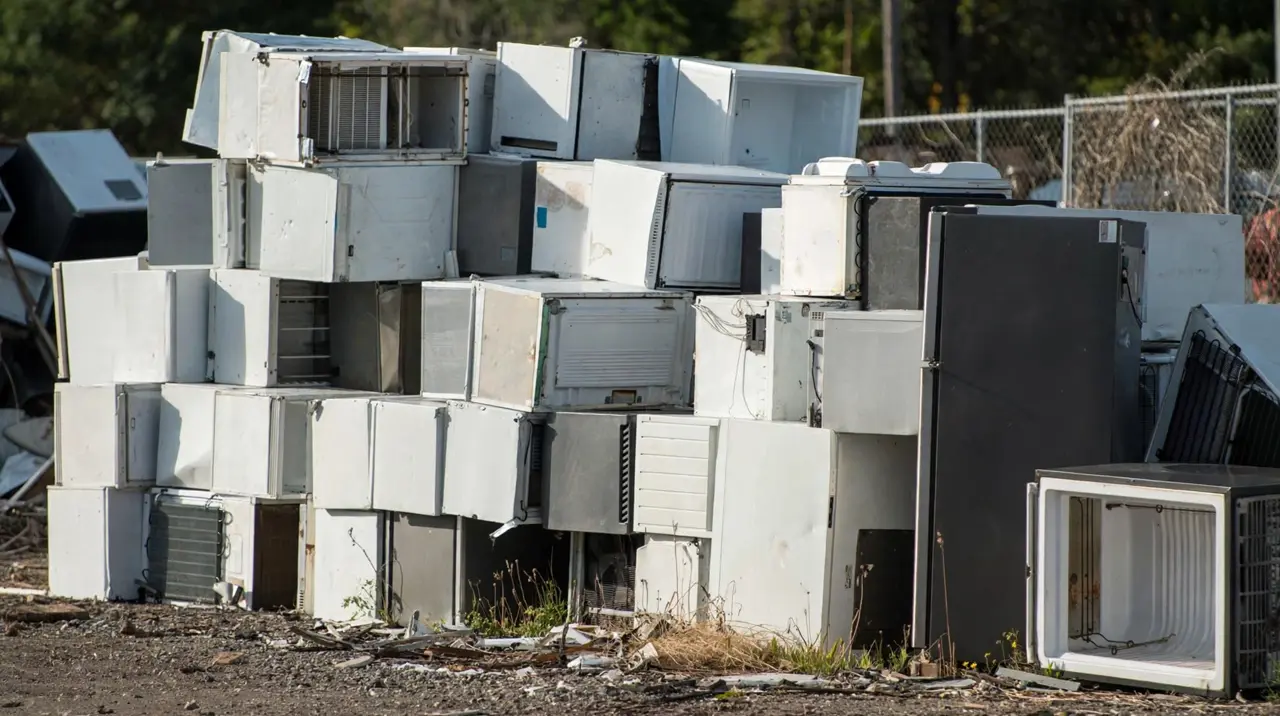
A national shortage of recycling capacity, combined with the closure of specialist treatment facilities, has left thousands of refrigerators and freezers in London without a recycling route.
Earlier this year, the Local Government Association warned that "a significant backlog" was emerging nationally, with dozens of councils forced to halt or limit collections of fridges and freezers from residents. Several London councils have stopped accepting these appliances as bulky waste.
Preparing your appliance for disposal
Before giving up a fridge or freezer, households should empty it and take out all food, shelves, drawers and any loose parts. Frost-free units do not need defrosting, but other freezers must be defrosted fully.
Next, unplug the appliance from the power supply and secure its cable so that it does not create a tripping hazard during transport. If the unit will be kept at home before disposal, either remove the doors or tape them shut to stop incidents such as children becoming trapped inside.
Handing it over to an authorised recycler
Under Waste Electrical and Electronic Equipment (WEEE) regulations in the UK, refrigerators and freezers must be handled at specialist facilities. The preferred option is to give the old appliance to the company delivering the new one. Retailers of electrical and electronic equipment are legally obliged to offer customers a disposal route when they purchase a replacement of the same item, and WEEE rules cover purchases made in store, online, by mail order or by telephone.
When no take-back service applies because the old unit is being discarded rather than replaced, some local authorities or licensed waste contractors can collect white goods and send them to Approved Authorised Treatment Facilities (AATFs). Bulky waste pickups can be arranged through each London council's website.
Some councils belonging to the West London Waste Authority cannot currently collect fridges or freezers for recycling: Brent, Ealing, Hillingdon, Hounslow and Richmond Upon Thames. Lewisham Council applies a partial restriction to American-style or double-door models.
Handling refrigerants safely
Fridges and freezers contain refrigerants and insulating foam that may hold polluting greenhouse gases such as hydrofluorocarbons (HFCs). Dan Cooke, director of policy, communications and external affairs at the Chartered Institute of Waste Management, said: "A fridge has to go to a specialist recycling facility.
"In a completely enclosed and specialist facility, the gases have to be recovered very carefully for either recycling or for high temperature destruction."
Cutting refrigerant pipes or puncturing the system at home is prohibited.
How long the backlog may last
Cooke attributed the decommissioning problem to several combined factors. "There are about 10 fridge and white good recycling plants around the UK, and for a combination of fires, bankruptcy, and a change of use, three of those plants have closed down," he said.
"At the same time, we had heat waves in the summer, and lots of people bought new fridges, and we're looking to get rid of theirs.
"You add those two things together, and we have a backlog of more people trying to get rid of fridges and white goods than we have the capacity to handle."
He added that a new processing plant was expected to begin operating shortly. "In due course we will overcome the blip," he said.
"Some of the companies that are licensed to deal with these gadgets and these materials have found some outlets in Europe, so we've exported, but that's only temporary."
Listen to the best of BBC Radio London on Sounds and follow BBC London on Facebook, X and Instagram. Send your story ideas to [email protected]
Source: