Commemorative stone unveiled for Mobo founder Kanya King
The unveiling took place at Queens Park Community School, where King once studied. The stone bears the inscription Paving the Way.
Alice Bhandhukravi, Ruth Comerford Updated 25 nov
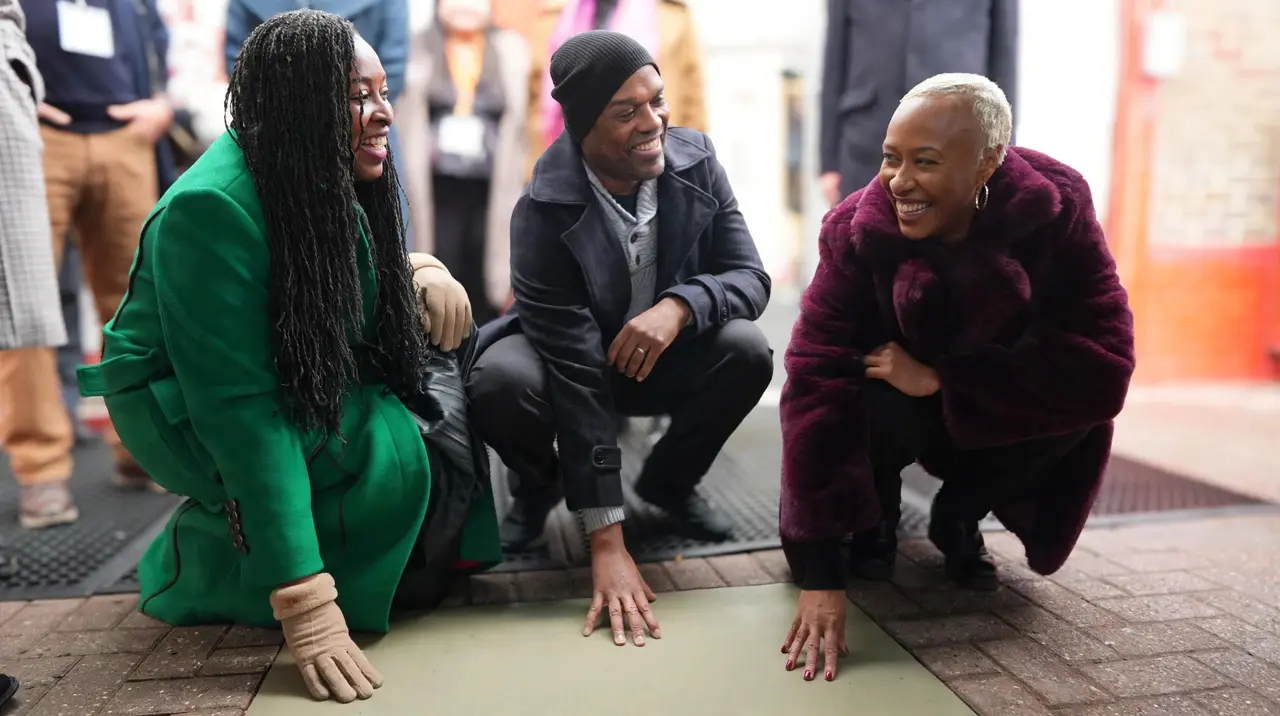
The unveiling took place at Queens Park Community School, where King once studied. The stone bears the inscription Paving the Way.
The Mobo Awards, which celebrate black music, culture and excellence, were first staged in 1996.
Speaking to BBC London, Sandé said: "My first time performing live on TV was at the Mobos. But Kanya took a risk on me and she said, you know, we see your talent, we want you to be seen."
Butler asked pupils to view the memorial as a "power stone", pointing to the difficulties King had to overcome in order to establish the Mobos.
"The industry tried to hold her back. But woe betide them.
"It took a long time for the industry to recognise what Kanya was doing and her dream.
"You all have it - recognise your personal power, and live your dream."
King is regarded as having been instrumental in pushing black music and culture into the mainstream in the UK. She received a CBE in 2018 and died this summer at the age of 57 from colon cancer.
During the 2025 Mobo Awards in Newcastle, she was unexpectedly brought on stage to receive the Paving the Way award, which acknowledges people who have broken barriers and opened doors for those coming after them. Past recipients include Sir Lenny Henry, Ms Dynamite, Nicola Adams, Dame Jessica Ennis-Hill, Sir Idris Elba, Dame Denise Lewis, Wiley and Jamal Edwards.
A statement from the Mobo Organisation read: "Kanya had the courage to challenge an industry, create opportunities and build a platform that would go on to change the landscape of British music and culture.
It's particularly fitting that someone who spent her life paving the way for others should now be honoured with a stone of her own."
British DJ and producer Jazzie B, whose real name is Trevor Beresford Romeo, received the first outstanding contribution to black music honour. He described King's influence and legacy as "incredible".
"She wasn't a musician, but she saw this to be such an important thing - to recognise people of black origin.
"Everything she did, and everything she stood for - it made an amazing impact, that will never ever be forgotten."
Listeners can hear highlights from BBC Radio London on Sounds, and follow BBC London on Facebook, X and Instagram. Story suggestions can be sent to [email protected]
Source: