Britain Observes Two Minutes of Silence on Armistice Day
Britain observed a period of silence on Armistice Day to mark the end of World War One and honour those who have died in conflicts.
Harriet Whitehead Updated 25 nov
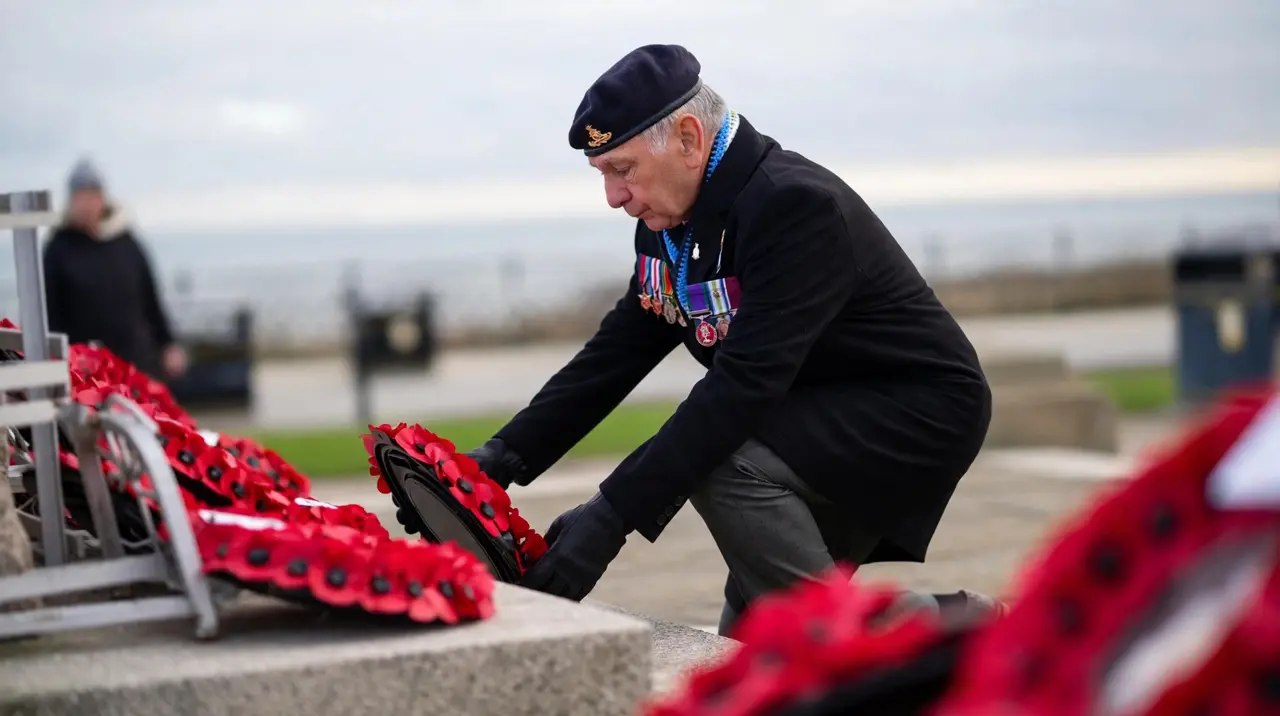
Britain observed a period of silence on Armistice Day to mark the end of World War One and honour those who have died in conflicts.
A national remembrance ceremony took place at the Cenotaph in London, where a two-minute silence was held at 11:00, with similar observances across England, Scotland, Wales and Northern Ireland.
Defence Secretary Wes Streeting placed a wreath at the Cenotaph, joined by senior military figures, children and cadets.
In Staffordshire, the Duke and Duchess of Gloucester laid a wreath at the Royal British Legion National Remembrance Gardens, where hundreds of people gathered at the Armed Forces memorial, a site previously called the National Memorial Arboretum.
Among the veterans present was Geoffrey Spencer, 101, who enlisted in the RAF in 1943. Speaking to the BBC, he said he felt "lucky" to be among the last surviving World War Two veterans and that he had "two very narrow escapes" during his service.
Spencer recounted surviving a crash landing and described a separate mission in which one of the planes he was with was lost entirely, with 22 men on board.
The memorial was also attended by people who served in more recent conflicts, including the Falklands and Afghanistan.
Andy Burnham paid his respects at the opening of Prime Minister's Questions in Parliament, honouring "all those who made the ultimate sacrifice for our country" and commending the "courage and bravery of all our Armed Forces".
Fighting in World War One ended under the Armistice, which paved the way for peace negotiations and began at 11:00 on 11 November 1918.
The Cenotaph ceremony in Whitehall also commemorated the 110th anniversary of the Battle of the Somme.
Wreaths were placed during a service at the Portsmouth World War One Memorial at Guildhall Square in Hampshire, while a crowd gathered at the Tommy statue in Dover, Kent, a tribute to World War One soldiers.
In Leeds, local leaders and dignitaries were accompanied by members of the public at a service held at the Victoria Gardens War Memorial.
In Scotland, the one o'clock gun at Edinburgh Castle was fired at 11:00 to signal the start of the two-minute silence. Further commemorations took place at the Scottish National War Memorial in Edinburgh Castle and at George Square in Glasgow.
In Conwy, in north Wales, a crowd assembled in the town square as local school pupils read the names of the fallen. Sian Grady, Mayor of Conwy, said that gathering to remember remains "still as relevant today as it ever was".
In the south west, serving military personnel and wreath bearers took part in an Armistice Day rail journey from Penzance, Cornwall, to London. The Poppies to Paddington train called at stations along the route, retracing the journey made by thousands of soldiers heading to the front line.
Observances have also been held across Europe, with French President Emmanuel Macron attending a ceremony in Paris where a wreath was placed at the Tomb of the Unknown Soldier.
On Remembrance Sunday, King Charles led the nation in a two-minute silence in London to honour veterans who had died in conflict. He placed a wreath at the Cenotaph before a march-past involving 10,000 armed forces veterans.
Reporting came from Sarah Easedale in Conwy and BBC Midlands correspondent Phil Mackie in Staffordshire.
Source: